You have a woven bag with a PE inner liner. The bag is destined for cement, chemicals, or fine powders—products where even a pinprick-sized gap means dust escapes and customers complain. The top of the bag is sealed. The valve is formed. But at the bottom, you face a choice: heat seal or adhesive tape?
Both methods can create a dust-tight bottom closure. But they work differently, suit different materials, and come with different trade-offs in cost, speed, and reliability. This guide compares heat sealing and adhesive tape sealing for dust-tight woven bags with liners, helping you match the right method to your product and production environment.
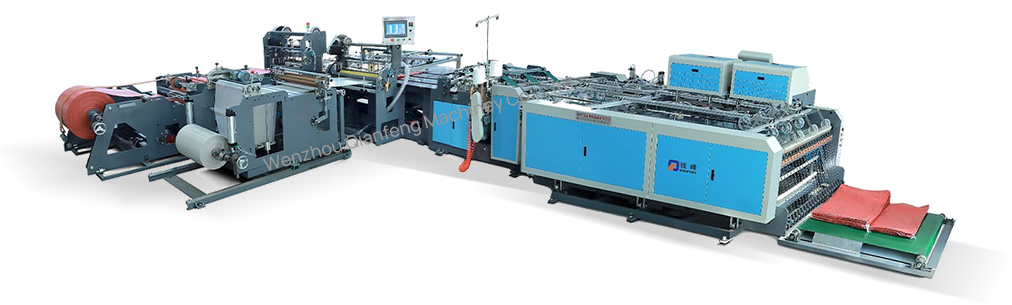
A dust-tight woven bag typically has a multi-layer construction. The outer layer is woven PP fabric—strong and tear-resistant, but porous. To contain fine powders, the bag needs a barrier layer. For many applications, that barrier is a PE liner (often 20–80 µm thick) inserted into the bag.
But the liner alone is not enough. The bottom of the bag—where the outer fabric and liner meet—must be sealed completely. Any gap, stitch hole, or unsealed edge becomes a path for dust to escape during filling, transport, and handling.
What dust-tight means in practice: A dust-tight bag must prevent particle migration through the bottom closure under real operating conditions—including the high-velocity air entrainment that occurs during automated filling. Stitching alone is insufficient for dust-tight applications because needle holes create dust paths. Bottom sealing closes those paths.
The two primary methods for achieving this bottom closure are heat sealing and adhesive tape sealing. Each has distinct characteristics that make it more or less suitable for different bag constructions and production environments.
For an overview of converting equipment that can integrate bottom sealing stations, see the fully automatic bag conversion line series.
Heat sealing uses thermal energy to melt a thermoplastic layer within the bag material, creating a fused bond that seals the package. For woven bags with liners, heat sealing typically involves applying controlled heat and pressure to the bottom area, melting the PE liner and any coating layer together with the PP fabric to form a continuous, pore-free seal.
The bag bottom is positioned in a heat sealing station
Heated elements (plates, bars, or hot air nozzles) apply heat to the bottom area
The PE liner melts and fuses with the coating layer on the woven fabric
Pressure consolidates the melt, creating a unified seal
The seal cools and solidifies, forming a continuous barrier
In hot air sealing—a common variant for laminated woven bags—hot air welding technology is used, achieving high bonding strength with a welding coefficient of approximately 90%.
| Advantage | Why It Matters |
|---|---|
| No needle holes | Eliminates the primary dust path found in stitched designs |
| High bonding strength | Welding coefficient of ~90%; seal integrity is not affected by surface dust on the bag body |
| Clean, professional appearance | Flat, square footprints enable disciplined stacking |
| Environmentally friendly | Avoids chemical adhesives; no odors or secondary contamination |
| Faster production | No drying or curing time required |
| Lower material cost | Coating layer serves as both insulation and bonding layer; it eliminates need for expensive polyurethane glue |
| Limitation | What It Means |
|---|---|
| Material-specific | Requires a thermoplastic layer (PE coating or film) in the bag construction; not suitable for materials without heat-sealable components |
| Precise control required | Temperature, pressure, and time must be carefully balanced; overheating can cause leaks or cracks |
| Lamination-dependent | Bag must have a sealable coating or film; uncoated woven PP alone cannot be heat-sealed reliably |
Adhesive tape sealing involves applying a tape—typically PE or hot-melt adhesive tape—over the bottom seam of the bag. The tape adheres to the outer fabric and, in some configurations, bridges the seam to create a dust barrier.
The bag bottom is positioned in a taping station
Adhesive tape is applied over the bottom seam (which may be stitched or folded)
Pressure ensures the tape adheres to the fabric surface
The tape bridges any gaps or needle holes, creating a barrier
Common tape types include PE-based tapes with strong adhesive properties, designed specifically for sealing bag seams and preventing dust leakage.
| Advantage | Why It Matters |
|---|---|
| Material flexibility | Can be used with a wide range of bag materials, including those not suitable for heat sealing |
| Simpler equipment | Generally, lower capital investment than heat sealing systems |
| Works with stitched seams | Can seal needle holes in stitched bottom constructions |
| Resealable options | Some adhesive tape configurations allow for resealable closures |
| Limitation | What It Means |
|---|---|
| Surface cleanliness required | Tape adhesion depends on a clean, dust-free surface; dust contamination reduces bond strength |
| Lower long-term integrity | Adhesive seals may degrade over time or under temperature variation |
| Additional material cost | Tape is a consumable; an ongoing material expense |
| Not as environmentally friendly | Uses chemical adhesives; may not meet certain food-contact or sustainability requirements |
| Comparison Factor | Heat Sealing | Adhesive Tape Sealing |
|---|---|---|
| Seal integrity | Fused bond; no gaps | Bond relies on adhesive; gaps possible if tape lifts |
| Dust-tight performance | Very high; continuous barrier | Moderate to high; depends on tape adhesion |
| Material requirement | Requires heat-sealable coating/film | Works with most materials |
| Surface sensitivity | Unaffected by surface dust | Requires a clean, dust-free surface |
| Production speed | Fast; no curing time | Fast tape application is quick |
| Ongoing consumable cost | Lower; no tape/glue required | Higher tape is a consumable |
| Environmental impact | Cleaner; no chemical adhesives | Uses adhesives; may raise concerns for food/pharma |
| Material cost savings | Can save at least 0.15 yuan per bag in adhesive costs | No savings; tape adds cost |
| Suitability for liners | Excellent; fuses liner to outer layer | Moderate; tape seals the seam but may not bond liner directly |
| Equipment complexity | Higher, precise temperature control required | Lower, simpler application mechanism |
Use this framework to determine the right bottom sealing method for your dust-tight woven bags with liners.
| If your bag has… | Then… |
|---|---|
| PE coating or other heat-sealable layer | Heat sealing is viable and often preferred |
| No coating or heat-sealable layer | Heat sealing is not possible; consider adhesive tape |
| BOPP lamination with heat-sealable coating | Heat sealing is viable |
| Uncoated woven PP only | Adhesive tape (with or without stitching) is the primary option |
| If your application… | Then… |
|---|---|
| Requires maximum dust containment (cement, fine chemicals) | Heat sealing is strongly preferred |
| Has moderate dust requirements | Either method may work |
| Involves food or pharmaceutical products | Heat sealing is preferred to avoid chemical adhesives |
| If your production environment… | Then… |
|---|---|
| Has dusty conditions that could affect tape adhesion | Heat sealing is more reliable |
| Requires fast changeover between bag types | Tape sealing may offer more flexibility |
| Prioritizes lower ongoing consumable costs | Heat sealing has a lower per-bag material cost |
| If sustainability is a priority… | Then… |
|---|---|
| Yes – avoiding chemical adhesives is important | Heat sealing is more environmentally friendly |
| No cost is the primary driver | Evaluate total cost (equipment + consumables) for both |
Profile: 50,000 bags/day. BOPP-laminated valve bags with PE liner for cement packaging. Dust containment is critical; any leakage results in customer rejection.
Bottom sealing choice: Heat sealing.
Why: Heat sealing creates a continuous, pore-free seal that eliminates dust paths. The BOPP lamination provides a heat-sealable surface. Hot air welding achieves high bonding strength, unaffected by surface dust. No needle holes means no dust paths. The clean, square bottom footprint also improves pallet stability.
Additional consideration: The PE liner fuses with the coating layer during heat sealing, creating a unified dust barrier. Adhesive tape would only seal the outer seam, leaving potential gaps between liner and fabric.
Profile: Contract manufacturer producing various bag types. Some are uncoated woven PP with PE liners (no heat-sealable layer). Others are coated.
Bottom sealing choice: Adhesive tape sealing (for uncoated bags) + heat sealing (for coated bags).
Why: Uncoated woven PP cannot be heat-sealed directly. Adhesive tape provides a practical dust barrier by covering the seam. However, note that tape adhesion depends on a clean surface—in dusty bag production environments, this may require additional cleaning steps.
Equipment consideration: A line with both taping and heat sealing stations provides the flexibility to handle both material types.
For a broader understanding of how bottom sealing fits into complete bag production, see the PP woven bag production line overview.
You have now covered:
What bottom sealing with liner means – closing the bottom of a woven bag with an inner liner to create a dust-tight barrier
Heat sealing – fuses liner and coating using heat; high integrity, no consumable tape, environmentally friendly
Adhesive tape sealing – applies tape over the seam; flexible material compatibility, but requires clean surfaces and ongoing consumable cost
Decision framework – check bag construction, dust-tight requirement, production environment, and sustainability priorities
Real-world scenarios – cement bags (heat sealing preferred), multi-product lines (both methods may be needed)
Once you have identified your bag construction and dust-tight requirements, comparing specific equipment configurations becomes meaningful. You can evaluate whether a heat sealing station, a taping station, or both better fits your production mix.
For a modular view of individual converting stations—including bottom sealing equipment—the single-function machines section provides component-level specifications that can help you understand each station’s role.
To continue building your knowledge of dust-tight bag production, here are suggested topics that complement this guide:
PE Coating vs BOPP Lamination: Choosing the Right Cutting Method for Valve Bags
Hot Cutting Temperature Optimization for Laminated Valve Bags
Valve Bag Production: Required Converting Features for Cement and Chemical Sacks
Liner Insertion for Dust‑Tight Bags: Alignment and Sealing Considerations
Heat Sealing vs Stitching: When to Eliminate Needle Holes for Dust Containment
Outer Bag Cutting Length (mm):600-1200
Outer Cloth Width (mm):450-650
Inner Bag Wider than Outer Bag (mm) +20
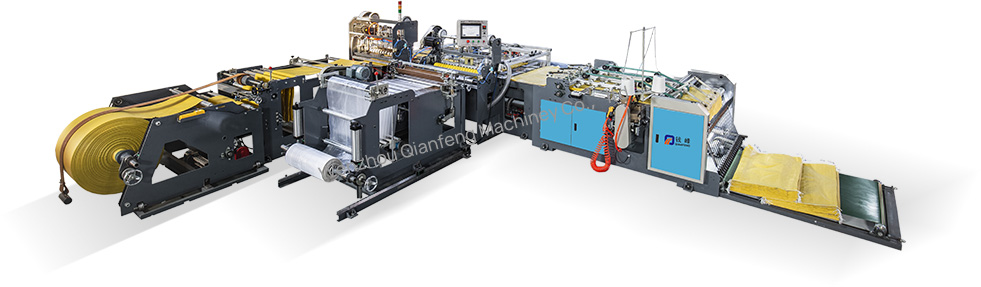
Outer Bag Cutting Length (mm):600-1200
Outer Cloth Width (mm):400-680
GET A QUOTE



 中文
中文 English
 Pусский
 Français
 Español