You have two laminated valve bag orders on the production schedule this week. One uses PE-coated woven fabric. The other uses BOPP-laminated material. Can both run through the same cutting station with the same settings?
The answer depends on how each lamination type responds to heat. PE-coated bags can typically tolerate heat cutting—and often benefit from the sealed edge it produces. BOPP-laminated bags, however, are more heat-sensitive; excessive heat can cause the film to shrink, distort, or wrinkle at the cut line.
This guide explains the material differences between PE coating and BOPP lamination, compares how each responds to hot cutting versus cold cutting, and provides a practical framework for choosing the right method for your valve bag production.
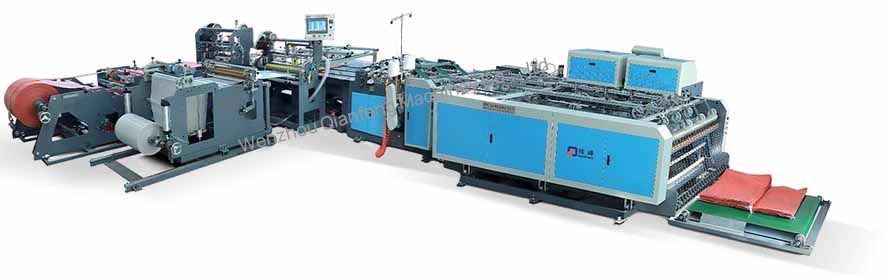
Before comparing cutting methods, it helps to understand what “PE coating” and “BOPP lamination” actually mean in the context of valve bag production.
PE coating is a layer of molten polyethylene extruded directly onto the woven polypropylene fabric during production. The PE penetrates the weave slightly and bonds to the PP surface as it cools. The resulting structure is a single, continuous material with the PE layer firmly attached to the woven core.
Key characteristics:
The PE layer is bonded directly to the PP fabric
The coating thickness is typically 10–30 microns
The material behaves as a unified structure
Heat tolerance: PE melts at a lower temperature than PP, but the integrated structure can generally withstand hot cutting without significant distortion
BOPP (biaxially oriented polypropylene) lamination involves a pre-formed film that is applied to the woven PP fabric using adhesive or heat lamination. The BOPP film is stretched in both directions during manufacturing, which gives it strength, clarity, and a glossy appearance—but also makes it dimensionally sensitive to heat.
Key characteristics:
A separate film layer adhered to the woven fabric
The film is oriented (stretched), creating internal tension
Heat can release this tension, causing the film to shrink or distort
Often used for printed bags where graphics quality is important
The practical difference: PE coating is part of the fabric; BOPP lamination is a film applied on top. This structural difference is the primary reason the two materials respond differently to cutting heat.
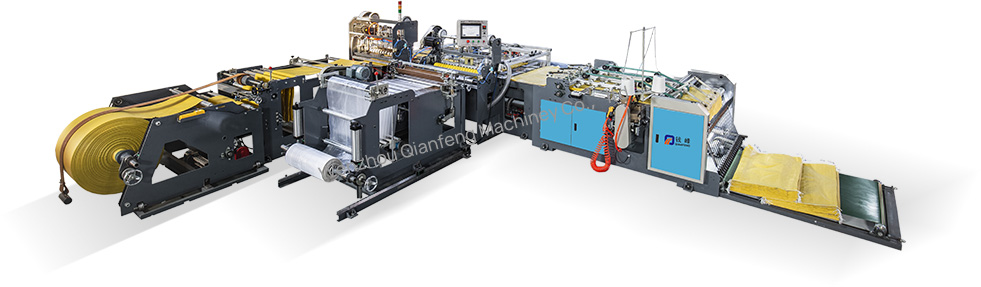
For valve bag production, converting lines with hot/cold blade switching provide the flexibility to handle both material types. See the fully automatic bag conversion line series for examples of dual-mode cutting capability.
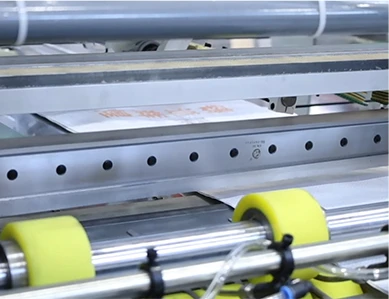
A heated blade or wire cuts through the material while simultaneously melting the cut edges. For laminated materials, this melting can bond the lamination layer to the woven core at the cut line, creating a sealed edge that resists fraying and delamination.
When hot cutting works well:
Materials that can tolerate heat without distortion
Applications where edge sealing is required (dust containment, moisture barrier)
Bags where the cut edge will remain exposed
Risks of hot cutting:
Heat-sensitive films may shrink, wrinkle, or distort
Excessive heat can cause blade residue buildup
Overheating may degrade the material at the cut line
A sharp blade shears the material without applying heat. The cut is clean at the moment of cutting, but the edges remain unsealed.
When cold cutting works well:
Heat-sensitive materials (BOPP lamination, certain coatings)
Applications where edge sealing is not required
Materials where maintaining film integrity is critical
Risks of cold cutting:
Unsealed edges may fray over time
Lamination layers may separate at the cut line if not properly bonded
May require additional edge finishing steps (hemming, folding)
PE-coated woven fabric presents a relatively forgiving case for cutting method selection.
Because the PE coating is extruded directly onto the PP fabric and the two materials are integrated, hot cutting can effectively seal the cut edge. The heat melts both the PE coating and the PP yarn ends, fusing them together at the cut line.
Benefits:
Sealed edge reduces fraying and delamination
Improved dust containment for cement, chemicals, and fine powders
Cleaner appearance at the cut line
Considerations:
Temperature must be balanced: too high, and the PE coating may become brittle; too low, and the edge won't seal properly
PE coating melts at a lower temperature than the PP core, requiring precise temperature control
Cold cutting is also viable for PE-coated valve bags, particularly when edge sealing is not a critical requirement.
Benefits:
No heat-related risks
Simpler process control
Suitable for applications where the cut edge will be folded into a hem or seam
Considerations:
The cut edge remains unsealed; PE coating may separate from PP at the cut line over time
Fraying may occur with handling and transport
Bottom line for PE-coated valve bags: Both hot cutting and cold cutting can work. The choice depends on whether edge sealing is required for your application. Hot cutting is preferred for dust-tight packaging (cement, chemicals); cold cutting may be sufficient for less demanding applications.
BOPP-laminated valve bags present a different picture. The oriented film structure makes them more sensitive to heat.
BOPP film is stretched during manufacturing to achieve its strength and clarity. This stretching creates internal tension within the film. When heat is applied—particularly at the concentrated point of a cutting blade—this tension can release unevenly, causing:
Shrinkage: The film pulls back from the cut line
Wrinkling: Uneven contraction creates surface distortions
Delamination: The film separates from the woven fabric at the cut edge
Printed graphic distortion: If the BOPP is pre-printed, heat can distort the graphics
This is why many manufacturers prefer cold cutting for BOPP-laminated materials. The cold blade shears the material cleanly without introducing heat-related risks.
Cold cutting preserves the dimensional stability of the BOPP film. The cut is clean, and the film remains intact without shrinkage or distortion.
Benefits:
No heat damage to the film
Printed graphics remain undistorted
Consistent cut quality without temperature variables
Considerations:
The cut edge is unsealed
May require hemming or folding to finish the edge
Lamination separation at the cut line is possible if the adhesive bond is weak
Some equipment configurations support hot cutting for BOPP-laminated materials, but with careful temperature control. If the temperature is kept sufficiently low—just enough to cut but not enough to cause distortion—hot cutting can work. However, the margin for error is narrow, and cold cutting remains the more reliable choice for most BOPP-laminated valve bag applications.
| Material | Recommended Cutting Method | Reason |
|---|---|---|
| PE-coated woven | Hot cutting (preferred) or cold cutting | Integrated structure tolerates heat; hot cutting seals edge |
| BOPP-laminated woven | Cold cutting (preferred) | Heat can distort oriented film; cold cutting preserves integrity |
| BOPP-laminated with printed graphics | Cold cutting (strongly preferred) | Heat damages print quality |
For manufacturers processing both material types, equipment with automatic hot/cold switching reduces changeover time. See the PP woven bag production line overview for integration considerations.
Use this framework to determine the right cutting method for your laminated valve bag production.
| If your bag uses… | Then… |
|---|---|
| PE coating | Both hot cutting and cold cutting are viable options. Proceed to Step 2. |
| BOPP lamination | Cold cutting is strongly recommended. Hot cutting only if your equipment can maintain very precise, low temperatures and you have validated the process with your specific material. |
| If your application… | Then… |
|---|---|
| Requires dust-tight sealing (cement, chemicals, fine powders) | Choose hot cutting to seal the cut edge |
| Does not require edge sealing; edge will be hemmed or folded | Either method can work; cold cutting may be simpler |
| Uses printed graphics on the PE coating | Hot cutting may cause discoloration at the cut line; cold cutting preserves print quality |
| Equipment feature | Why it matters |
|---|---|
| Hot/cold blade switching | Allows one line to handle both material types without separate equipment |
| Precise temperature control | Essential for hot cutting PE-coated bags without overheating |
| Sharp, well-maintained cold blades | Cold cutting quality depends on blade sharpness; dull blades cause ragged edges |
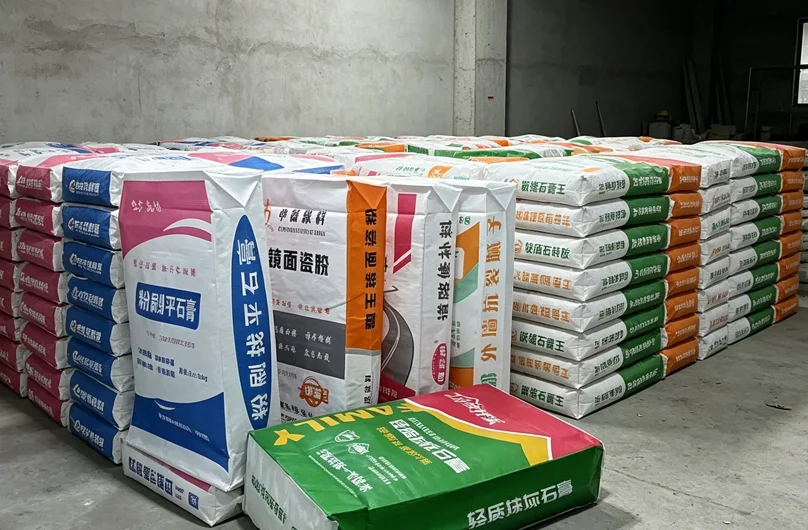
Profile: 50,000 bags/day. PE-coated woven PP valve bags for cement packaging. Dust containment is critical; customers require no powder leakage through the bag.
Cutting method choice: Hot cutting.
Why: The hot cut seals the PE coating to the PP core at the cut line, creating a dust-tight edge. Cold cutting would leave unsealed yarn ends where cement powder could escape.
Equipment consideration: A converting line with precise temperature control for hot cutting the PE-coated material consistently at production speed.
Profile: 30,000 bags/day. BOPP-laminated valve bags with full-color brand graphics. Appearance quality is paramount.
Cutting method choice: Cold cutting.
Why: Heat from hot cutting could distort the BOPP film and damage the printed graphics. Cold cutting preserves the film integrity and print quality.
Equipment consideration: A high-speed cold cutting machine with servo-controlled length accuracy. The unsealed cut edge is acceptable because the bag design includes a hem that covers the cut line.
Profile: Contract manufacturer producing various valve bag types. Runs PE-coated cement bags one week, BOPP-laminated pet food bags the next.
Cutting method choice: Dual-mode line with hot/cold blade switching.
Why: The same equipment handles both material types by switching cutting methods. PE-coated bags run with hot cutting for edge sealing; BOPP-laminated bags switch to cold cutting to avoid heat distortion. Changeover time is minimal, and no separate equipment is required.
Equipment consideration: A fully automatic bag conversion line with automatic switching between hot cutting and cold cutting.
You have now covered:
Material differences: PE coating is extruded onto the fabric (integrated structure); BOPP lamination is a film applied on top (oriented, heat-sensitive)
Cutting method fit: PE-coated bags can use hot cutting (preferred for edge sealing) or cold cutting; BOPP-laminated bags are best cut cold
Decision framework: Identify lamination type → assess edge sealing requirement → match to equipment capability
Real-world scenarios: Cement bags (PE-coated, hot cut), premium printed bags (BOPP, cold cut), multi-product lines (dual-mode switching)
Once you have identified your lamination type and edge sealing requirements, comparing specific equipment configurations becomes meaningful. You can evaluate whether a single-mode machine (hot only or cold only) or a dual-mode line with hot/cold switching better fits your production mix.
For a modular view of single-function cutting machines—including dedicated hot cutting machines and high-speed cold cutting machines for BOPP-laminated materials—the single-function machines section provides component-level specifications.
Once you have determined whether your valve bag uses PE coating or BOPP lamination and whether edge sealing is required, comparing specific cutting equipment becomes the next logical step. You can review configurations designed for hot cutting PE-coated materials or high-speed cold cutting for BOPP-laminated bags.
To continue building your knowledge of laminated valve bag production, here are suggested topics that complement this guide:
Hot Cutting Temperature Optimization for PE-Coated Valve Bags
Cold Cutting Blade Selection and Maintenance for BOPP-Laminated Materials
Valve Bag Production: What Converting Features Are Required for Cement and Chemical Sacks?
Lamination Quality and Its Effect on Cut Edge Performance
Dual-Mode Cutting Lines: When Hot/Cold Switching Makes Economic Sense
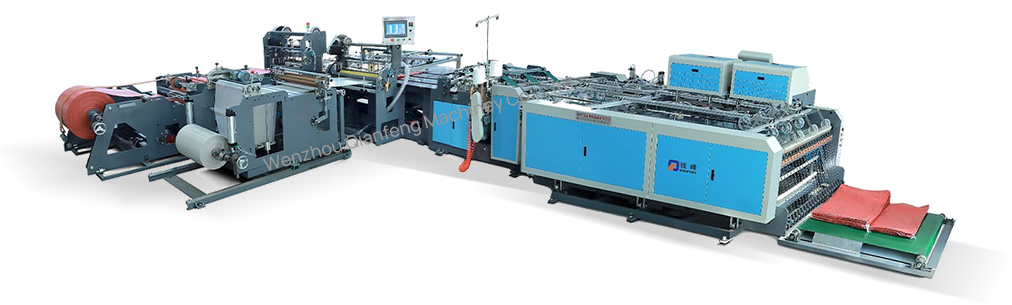
Outer Bag Cutting Length (mm):600-1200
Outer Cloth Width (mm):450-650
Inner Bag Wider than Outer Bag (mm) +20
Outer Bag Cutting Length (mm):600-1200
Outer Cloth Width (mm):400-680
GET A QUOTE



 中文
中文 English
 Pусский
 Français
 Español