Are you still relying on a scattered mix of standalone cutting, sewing, and stacking machines to produce PP woven sacks? If yes, you’ve probably already experienced the headache—inconsistent seam quality, constant material jams, and a production floor that looks more like a chaotic patchwork than a streamlined operation.
A PP Woven Bag Conversion Line is essentially an integrated automated system that takes rolled tubular woven fabric—fresh from the circular loom—and transforms it into finished, ready-to-use bags in one continuous workflow. Think of it as the “final assembly” station in the woven bag manufacturing journey. It doesn’t extrude the plastic or weave the fabric; it converts the fabric into its final packaging form by performing cross-cutting, bottom folding, stitching (or heat sealing), and stacking in a single pass.
But here’s where things get interesting. Modern conversion lines are far more than just “cut and stitch” machines. Depending on the configuration, they can also insert PE liners for moisture-sensitive goods, create valve sacks for cement or chemicals, or even produce block-bottom bags that stand upright on shelves. In other words, the bag type you end up with is largely defined by what your conversion line is designed to do.
The global demand for woven plastics machinery—including bag conversion equipment—is projected to grow at an annual rate of 4% to 6% through 2030, driven primarily by rising bulk packaging needs in agriculture, construction, and food sectors across Asia-Pacific. China, India, Vietnam, and Indonesia are leading this surge, fueled by their massive agricultural and industrial bases.
So, what exactly happens inside a PP woven bag conversion line? And more importantly, how do you know whether you need a basic unit or a full-featured multi-function conversion line?
Let’s walk through it step by step.
If you’ve ever watched a well-tuned conversion line in action, it’s almost mesmerizing. The fabric unspools from a roll, passes through precision registration sensors, gets cut to exact length, and then moves into the folding station where the bottom is shaped. Then comes the stitching or sealing unit, followed by an automatic stacker that counts and piles the finished sacks.
All of this happens at speeds that would make your head spin. Some high-speed bag conversion systems can churn out 40 to 60 bags per minute, depending on material type and bag dimensions. For heavy-duty applications like valve sack production, top-tier lines achieve up to 120 block-bottom sacks per minute.
But here’s the part that often surprises first-time buyers: the same conversion line can handle dramatically different material types. You can run standard uncoated PP woven fabric one hour, switch to BOPP-laminated material the next, and then process Leno mesh fabric for produce bags without swapping out major components. This flexibility is a game-changer for manufacturers who serve multiple market segments.
It helps to think about the end-use cases first. Why? Because the type of conversion line you need depends entirely on what your customers are putting inside the bags.
Here’s a quick breakdown of the major application categories and what each demands from a conversion system:
Agriculture (grains, seeds, fertilizers, animal feed): Needs strong seams, dust-proof construction, and often PE liner compatibility to protect contents from moisture. Fertilizer packaging specifically requires bags that can withstand rough handling during transport and resist chemical degradation.
Cement and construction materials: Requires valve sacks or pinch-bottom bags that can be filled automatically on high-speed packing lines. Cement producers prioritize tear resistance above all else—a broken sack on the filling line means lost product and downtime. The shift from traditional gunny bags to PP woven sacks in cement packaging has been massive, driven by superior strength, moisture resistance, and cost-effectiveness.
Chemicals and minerals: Demands packaging that meets region-specific safety standards. In India, for instance, IS 8069:2023 specifies the requirements for HDPE/PP woven sacks used for pesticides, insecticides, and fungicides in powder, granular, and flake form.
Food packaging (rice, flour, sugar, salt): Requires food-grade materials and often BOPP lamination for high-quality printing and moisture barrier. Food-grade PP woven bags must be made with 100% virgin polypropylene resin and food-approved additives to prevent contamination.
Retail and reusable shopping bags: Growing rapidly as plastic bag bans expand globally. Modern eco-friendly PP woven shopping bag machines can produce reusable bags from roll to finish in one process, cutting labor costs dramatically—as few as 1-2 operators needed.
What’s the common thread across all these applications? Automation. Manufacturers are increasingly investing in integrated conversion solutions to replace fragmented manual processes. According to industry analysis, factories using modern automatic bag conversion lines can reduce labor dependency by over 60% while cutting production costs by roughly 30%.
Let me tell you about a conversation I had recently with a bag plant owner in Southeast Asia. He was running six separate machines—a cutter here, a folder there, a stitching station around the corner, and three people just moving stacks of semi-finished bags between stations. His monthly labor cost for the finishing department alone was eating up nearly 40% of his margin. Worse, his defect rate hovered around 5% because every manual transfer introduced alignment errors.
He asked me: “How do my competitors keep their prices lower while maintaining quality?”
The answer wasn’t cheaper materials. It was integrated automation.
When you run a fragmented manual or semi-automatic setup, every handoff between stations is an opportunity for error. The bag gets misaligned during folding. The stitch line drifts. The cut length varies by a few millimeters. Individually, these are small issues. Collectively, they add up to rejected batches, unhappy customers, and a slow bleed on your bottom line.
A fully automatic conversion line eliminates those handoffs entirely. The fabric enters at one end; finished, stacked, counted bags exit at the other. No intermediate handling. No alignment drift. No “Oops, that one’s crooked” moments.
| Factor | Manual / Semi-Automatic | Automated Conversion Line |
|---|---|---|
| Speed | Low | High |
| Accuracy | Inconsistent | Precise |
| Labor Dependency | High | Low |
| Material Wastage | High (3-5%+) | Minimal (<1%) |
| Scalability | Limited | High |
This isn’t just theory. Manufacturers who have made the switch report rejection rates dropping to near zero and output per labor hour increasing 3x to 4x.
Here’s where many buyers get stuck. They see a conversion line spec sheet that looks perfect on paper, but when they try to run their actual material—maybe a slightly thicker fabric, or a bag with gussets, or a specific valve configuration—the machine chokes.
Customization matters enormously in the world of PP woven bag conversion. The bag you make for 50kg cement is structurally very different from the one you make for 5kg rice. A cement valve sack needs a reinforced bottom and a self-closing valve sleeve. A rice sack just needs a clean cut and a strong double stitch.
This is why you should look for manufacturers who offer modular conversion line designs—systems that can be configured with different modules depending on the bag types you need to produce. Common modules include:
PE liner insertion units for moisture-sensitive products like fertilizer and chemicals
Valve forming stations for cement and dry bulk powders
Handle punching and attaching modules for retail shopping bags
A truly multi-function conversion line can switch between these configurations without requiring an entirely new machine. That means you can serve multiple customer segments with a single capital investment—agriculture one week, construction the next, retail the week after.
If you’re unsure which configuration fits your production mix, View specific configuration options can help you map your bag types to the right module set.
Here’s a hard truth: many plant owners calculate ROI based solely on purchase price and speed. They compare machine A’s bags-per-minute against machine B’s, pick the faster one, and call it a day.
That’s a mistake.
The real ROI of a high-performance woven bag conversion system comes from three places most buyers overlook:
Changeover time. How long does it take to switch from producing a 25kg bag to a 50kg bag? Or from uncoated fabric to laminated fabric? On poorly designed lines, changeover can eat up 2-3 hours. On well-designed modular systems with servo-driven adjustments, it’s under 15 minutes. Over a year of frequent size changes, that difference alone can add hundreds of production hours.
Material yield. Advanced cutting systems with closed-loop servo drives cut with microsecond precision, minimizing waste between bags. Some lines achieve yield rates above 98%, meaning less than 2% of your expensive woven fabric ends up as scrap. In contrast, manual or semi-automatic setups often waste 5% or more due to inconsistent feeding and cutting errors.
Operator skill dependency. With a fully automated line, you don’t need master technicians to run production. A well-designed HMI (human-machine interface) with touchscreen controls allows relatively inexperienced operators to set bag dimensions, stitch parameters, and liner length in seconds. That means you’re not held hostage by the availability of skilled labor—a growing problem in many manufacturing regions.
One industry source notes that with the right strategy, you can recoup your investment in 5-10 years and be ready to upgrade to newer models as technology advances. But that’s a conservative estimate. For high-volume producers making the leap from manual to fully automated, payback periods of 18-24 months are not uncommon.
Not all conversion lines are created equal. The simplest systems—often called cut-and-sew lines—just cut the tubular fabric to length, fold the bottom, and stitch it closed. That’s perfectly adequate for open-mouth bags used in agriculture and many industrial applications.
But if you’re serving the cement industry or other sectors that use automated filling equipment, you’ll likely need valve sacks or pinch-bottom bags.
Pinch-bottom bags use a special adhesive (developed through years of research) to seal the bag top without stitching, creating a sift-proof closure that performs well on automated filling lines. Modern pinch-bottom conversion lines can produce these bags in inline operation with material-saving production and no compromise in performance.
Block-bottom valve sacks go a step further. They feature a reinforced flat bottom that allows the bag to stand upright, plus a valve sleeve through which the product is injected during filling. This design is considered the gold standard for cement and other dry bulk powders because it maximizes filling efficiency on automated packing lines while minimizing dust emissions.
The key takeaway? Don’t buy a conversion line based on speed alone. First, define the bag types your customers actually need. Then match the line configuration accordingly.
This brings us to the core question: when you’re ready to invest, where should you look?
The market offers everything from basic cut-sew units to premium European lines costing millions. In between lies a rapidly improving tier of Asian-manufactured equipment that delivers comparable quality at a significantly lower price point—with the added advantage of multi-function flexibility that many legacy European designs lack.
Qianfeng’s multi-function conversion lines fall squarely into this sweet spot. Rather than forcing you to buy separate machines for different bag types, their systems are engineered with modular conversion technology that supports:
Laminated and un-laminated woven fabric processing
PE liner insertion for moisture protection
Valve sack and flat-bottom configurations
Handle punching for retail and shopping bags
Hot/cut cutting systems for clean, non-fraying edges
For plant managers who need to serve multiple industries—say, agriculture and construction and retail—this flexibility transforms a capital expense into a strategic asset. You’re not locked into producing just one bag type. You can pivot as market demand shifts.
If you’re evaluating options and want to see how a modern multi-function line stacks up against single-purpose alternatives, Get selection suggestions provides a side-by-side comparison tailored to your production volume and bag mix.
Before you sign any purchase order, here are three questions to ask yourself—and any supplier you’re considering:
1. What’s the real-world speed on my material? Spec sheets always quote maximum speeds under ideal conditions. Ask for test runs using your actual fabric. Laminated material runs differently than uncoated fabric. BOPP behaves differently than standard PP. A line that hits 60 bags/min with perfect material might drop to 40 with yours.
2. How easy is parts and service access? Downtime is expensive. If a critical component fails, can you get a replacement within 48 hours? Does the manufacturer have local service representatives in your region, or will you be waiting weeks for a technician to fly in?
3. Can the line grow with you? Today you produce 500,000 bags per month. Next year, maybe 1 million. Does the line support speed upgrades or additional module integration, or will you need to replace the entire system? Modular designs offer a clearer upgrade path than monolithic ones.
Also, don’t underestimate the importance of proper training and maintenance. Common mistakes like neglecting lubrication schedules, using incorrect blade adjustments, or running incompatible materials can turn a perfectly good conversion line into a constant headache. Make sure your supplier includes comprehensive operator training and a clear maintenance protocol.
The PP woven bag market isn’t getting any less competitive. With global demand for bag making machines growing steadily and Asia-Pacific continuing to dominate both production and consumption, the gap between efficient producers and laggards is widening every year.
A well-chosen conversion line isn’t just a machine—it’s a competitive weapon. It allows you to:
Deliver consistent quality batch after batch, which builds customer trust and reduces returns
Respond faster to custom orders because changeovers take minutes instead of hours
Lower your per-bag cost through reduced labor, less waste, and higher throughput
Expand your market reach by producing multiple bag types from a single line
In short, the question isn’t really “What is a PP Woven Bag Conversion Line?”—it’s “Can you afford not to have one?”
For those ready to take the next step, Explore application cases shows how manufacturers across different industries have transformed their operations with modern conversion technology. And if you’re still comparing options, Understand modular design breaks down the specific configurations available for each bag type.
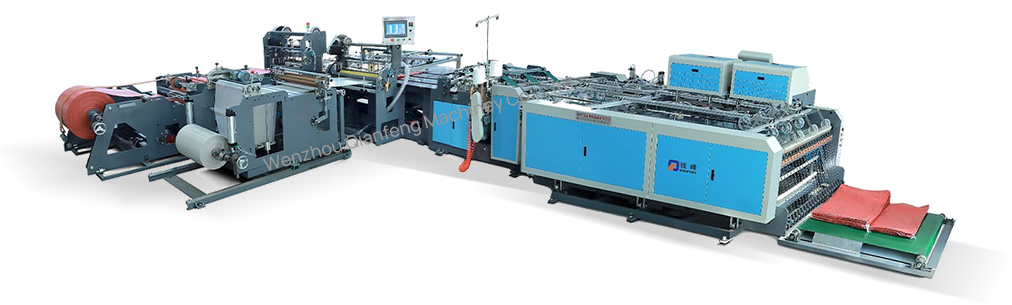
Outer Bag Cutting Length (mm):600-1200
Outer Cloth Width (mm):450-650
Inner Bag Wider than Outer Bag (mm) +20
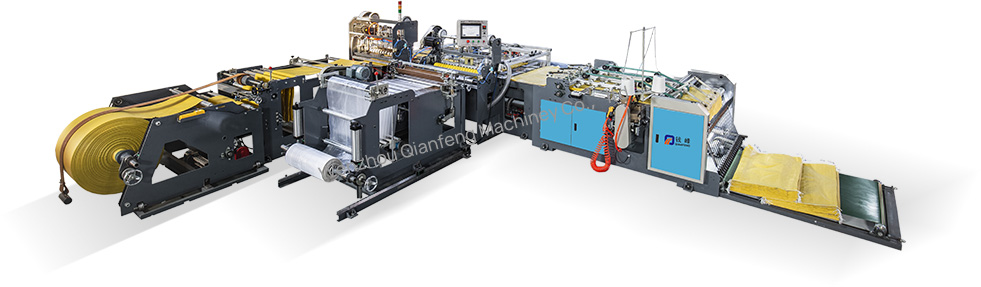
Outer Bag Cutting Length (mm):600-1200
Outer Cloth Width (mm):400-680
GET A QUOTE



 中文
中文 English
 Pусский
 Français
 Español