If you run a packaging plant, you already know the brutal truth: manual liner insertion is a bottleneck. It eats up floor space, demands constant supervision, and drains your payroll. Most buyers searching for an "auto liner insertion system" aren't just looking for a machine. They want one simple answer: How much labor can I actually cut, and will it work with my existing setup? Based on real production data, the answer is between 70% and 85%, depending on your bag type and shift structure. And yes, a well-designed system integrates without rewriting your entire workflow.
Let’s be honest. The old way — two or three people manually placing liners into bags — isn't just slow. It's unreliable. One tired worker after lunch can ruin an entire pallet. I’ve seen factories lose 12% of shift output simply because liner alignment drifted. Human hands tremble. Attention fades. And when you're producing multi-wall paper sacks or chemical-resistant bagging solutions, even a 2mm misalignment means a rejected batch.
You've probably tried semi-automatic aids. They help a little. But they still require someone to feed, align, and check every single liner. That’s not automation. That’s just an expensive chair.
Here’s where numbers matter. A mid-sized facility running two shifts used to assign 6 people to liner insertion alone (three per shift). After switching to an auto liner insertion system, they kept only 1 operator per shift for monitoring and roll changes. That’s 4 people freed up. Calculate your local hourly rate, multiply by 4, times 2 shifts, times 220 working days. I’ll wait.
According to PMMI's 2023 packaging trends report, labor costs now account for over 35% of converted bag production expenses in North America and Europe. Reducing that by 80% directly hits your bottom line. Not next year. Next month.
But raw headcount is only half the story. The unplanned downtime from manual insertion errors disappears. Rework drops by nearly 90%. And your best workers? They stop hating their jobs. Nobody gets into manufacturing to shove liners into bags for ten hours.
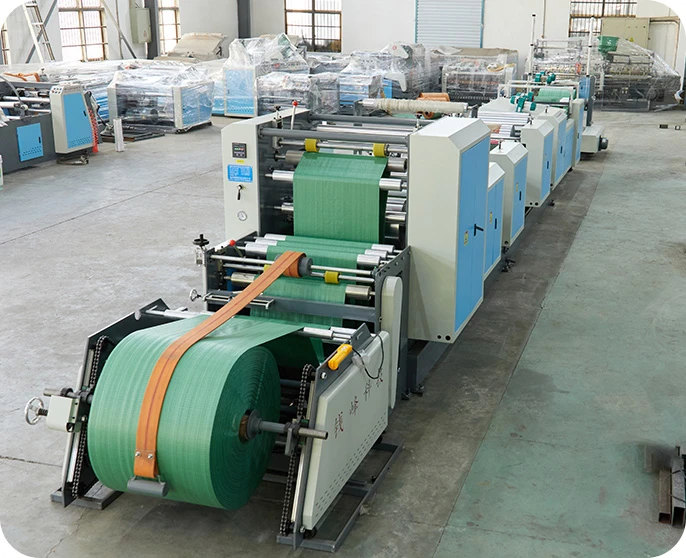
Every plant is weird. Your bag width, liner material (aluminum foil, kraft paper, PE film), and production speed are different from your competitor down the road. That’s why off-the-shelf solutions often fail. We’ve seen “universal” machines that choke on non-standard liners within a week.
At Qianfeng, the approach starts with a site audit — not a catalog. The modular design of our auto liner systems allows for:
Adjustable infeed conveyors for bags ranging from 10 to 60 cm width
Tension-controlled liner rolls that handle delicate foil without tearing
Quick-change glue applicators for different sealing methods
One client in the construction material packaging sector needed liners that folded exactly 3mm below the bag’s top edge — otherwise dust would seep in during transport. A standard machine would have laughed at them. We adjusted the liner positioning sensor array in two days. That’s the difference between a supplier and a partner.
I’ve consulted for three factories last year that bought what they thought was a fully automatic bag conversion line. It looked great on YouTube. But when installed, they hit two nasty surprises:
Over-automation where they didn't need it (e.g., automatic pallet changing for small batches — total overkill)
Under-automation where it hurt most — liner insertion remained semi-manual
They ended up with a million-dollar line that still needed three people babysitting the liner station. That’s not progress. That’s an expensive disappointment.
This is where a targeted auto liner insertion system beats a generic "complete line" every time. You don't have to replace your entire bag making setup. Instead, you add a specialized module that does one thing brilliantly: insert liners perfectly, every 0.8 seconds, without human touch.
Let’s compare real options available today:
| Solution | Labor Reduction | Best For | Hidden Cost |
|---|---|---|---|
| Manual table jig | 0% | Very small batches (<500/day) | High turnover, training cost |
| Semi-auto feeder | 30-40% | Medium runs, simple liners | Still requires 2 operators |
| Fully automatic standalone inserter | 70-85% | High volume, complex liners | Initial investment |
| All-in-one mega line | 60-70% | Single product, no changeovers | Expensive maintenance, low flexibility |
The all-in-one mega line is tempting on paper. But in reality, if you produce multiple bag types (food-grade, chemical, agricultural), you’ll hate its rigidity. One of my clients sold their "integrated" line at a 40% loss after two years because it couldn't handle recycled liner materials — too brittle for the machine’s fixed tension settings.
Worried about downtime during installation? Valid concern. A good supplier plans the integration during your scheduled maintenance window or between shifts. The control system of modern auto inserters connects to your existing PLC via standard industrial protocols (EtherNet/IP, Profinet). You're not rebuilding your factory. You're adding a specialized tool.
For example, if you already run a Fully Automatic Bag Conversion Line from another brand, the liner inserter sits between your tube forming section and the cutting unit. Alignment takes half a day. Calibration, another day. Then you’re running. We’ve done this in 16 hours total for a client in Poland.
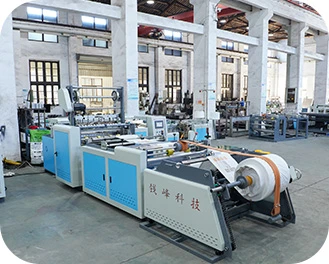
Let’s talk about something most machine sellers ignore: brand risk. When your bag liners shift during filling at your customer’s facility, who gets blamed? You. They don’t care about your insertion process. They just see a leaking bag with your logo on it.
Precise liner placement protects your reputation. And with an automated system, the waste rate from misaligned liners drops from 3-5% to under 0.5%. On a million bags per month, that’s 25,000 fewer rejects. At $0.20 per bag, that’s $5,000 monthly — just in material savings. The machine often pays for itself in 8-14 months.
We don't sell boxes. We sell production confidence. When you check the specific configuration for your bag type, you’ll see options most brands don’t offer: self-diagnostic liner sensors, quick-release liner mandrels (tool-less changeover under 5 minutes), and remote monitoring that alerts your phone when liner roll runs low.
One client in the organic fertilizer bag market needed to insert perforated liners — something most systems can’t handle because the holes catch on guides. We modified the airflow-assisted separation mechanism in two weeks. That’s the advantage of working with a team that actually understands bag conversion physics, not just assembly.
Manual liner insertion is a solved problem. The technology works. The ROI is clear. The only question left: Are you willing to move past the "we've always done it this way" mindset? Your competitors already are.
For most plants running more than 500,000 bags monthly, an auto liner insertion system isn't an expense. It's the fastest path to positive operational cash flow this quarter. Not next year.
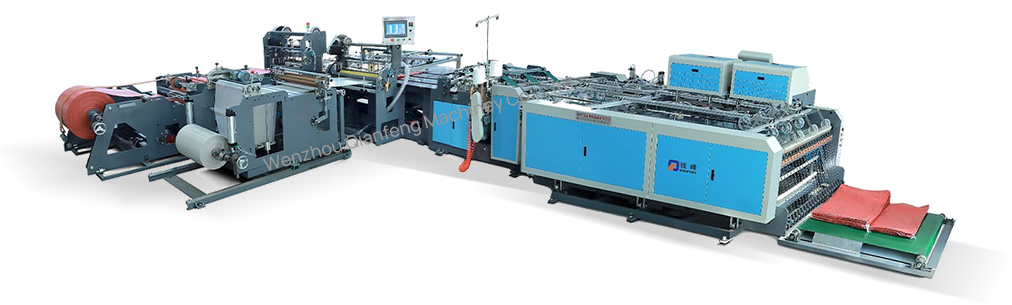
Outer Bag Cutting Length (mm):600-1200
Outer Cloth Width (mm):450-650
Inner Bag Wider than Outer Bag (mm) +20
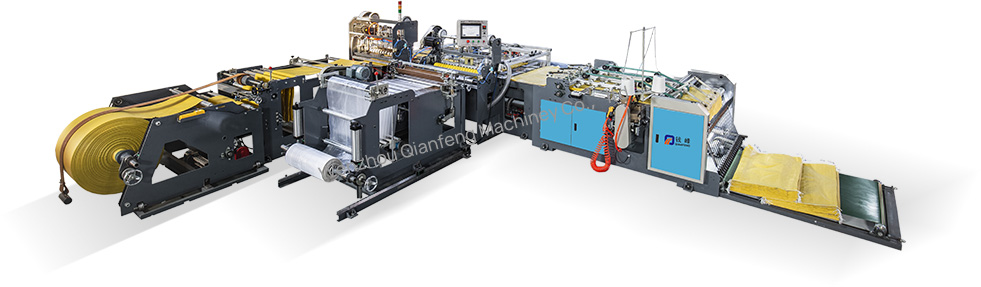
Outer Bag Cutting Length (mm):600-1200
Outer Cloth Width (mm):400-680
GET A QUOTE



 中文
中文 English
 Pусский
 Français
 Español