In PP woven bag production lines, the choice of cutting method is often debated. Some insist that cold cutting is more efficient, while others believe hot cutting provides better edge sealing. Behind this debate, one key question is often overlooked: What is the actual structure of your fabric? In reality, cold cutting and hot cutting are not opposing technologies. They are process solutions designed for different material properties. When correctly matched, both can deliver excellent results. When mismatched, even the most advanced equipment will fail to perform satisfactorily.
The primary factor that determines the cutting method is whether your PP woven bag has a lamination or coating layer. Lamination refers to a thin plastic film (usually PP or PE) fused onto the surface of the woven fabric. Once solidified, this film locks the fibers in place, forming a stable composite structure. In contrast, non-laminated woven fabric relies only on interlaced fibers without additional stabilization. This fundamental difference directly determines which cutting process is suitable.
Cold cutting uses a mechanical blade to cleanly cut the material. There are two equipment configurations available, and customers must choose based on budget and preference.
Option A: Large Knife Cutting (Vertical Cutting)
A large blade moves straight down vertically through the fabric.
Advantages:
Suitable for:
Option B: Flying Knife Cutting (Horizontal Traverse Cutting)
The blade moves rapidly from one side of the machine to the other, cutting across the fabric.
Advantages:
Considerations:
Suitable for:
Market Preference
At present, the vast majority of customers choose large knife cold cutting, due to its durability and low maintenance cost. Flying knife systems are mainly used where budget is the primary constraint.
Cold Cutting Performance on Laminated Fabric
Since the fibers are firmly fixed by the lamination layer, both large knife and flying knife cutting produce smooth, clean edges without any fraying.
| Item | Large Knife Cutting | Flying Knife Cutting |
| Durability | Very high, long blade life | Medium, frequent replacement needed |
| Equipment cost | Standard | Lower |
| Long-term operating cost | Low | Medium (blade replacement included) |
| Maintenance | Minimal | Regular blade changes |
| Cutting result | Smooth, no fraying | Smooth, no fraying |
| Market preference | Majority choice | Budget option |
Hot cutting uses a heated blade or wire to melt PP fibers during cutting, forming a sealed edge after re-solidification. This process solves the issue of loose fibers in non-laminated fabrics.
Suitable for:
Result:
Advantages:
Limitations:
| Fabric Type | Recommended Method | Cutting Result | Solution |
| Non-laminated PP woven fabric | Hot cutting | Sealed edge, no fraying | Hot cutting machine |
| Laminated woven fabric | Cold cutting | Smooth, no fraying | Large knife (preferred) or flying knife (budget option) |
Misconception 1: Cold cutting always produces fraying
Fact: Fraying depends on whether the fabric is laminated. Laminated fabric cut by cold cutting produces perfectly smooth edges.
Misconception 2: Hot cutting is always superior
Fact: Hot cutting is designed for non-laminated fabrics. For laminated materials, it increases energy cost and may damage the coating due to overheating.
Misconception 3: One machine can freely switch between cold cutting types
Fact: Cold cutting systems require a choice between large knife and flying knife. Most customers prefer large knife systems due to durability and lower maintenance.
Step 1: Does your fabric have a lamination or coating layer?
Yes → Cold cutting (go to Step 2)
No → Hot cutting recommended
Step 2 (Cold cutting route): What is your preference?
Long-term durability, low maintenance, minimal downtime → Large knife cold cutting (most preferred choice)
Limited budget, acceptable frequent blade replacement → Flying knife cold cutting
Hot cutting and cold cutting are not competitors—they are complementary solutions designed for different material structures.
Simple Summary:
Laminated / composite bags → Cold cutting
Large knife: durable, long blade life, low maintenance (market mainstream choice)
Flying knife: lower initial cost, but frequent blade replacement required
Non-laminated woven bags → Hot cutting
Sealed edges, no fraying
Cold cutting itself is not a single fixed solution; it requires selecting the appropriate configuration based on your budget and operational preference. Currently, most customers choose large knife cold cutting.
The correct cutting method is not about choosing the “best” technology, but about precisely matching your material type, investment budget, and production requirements.
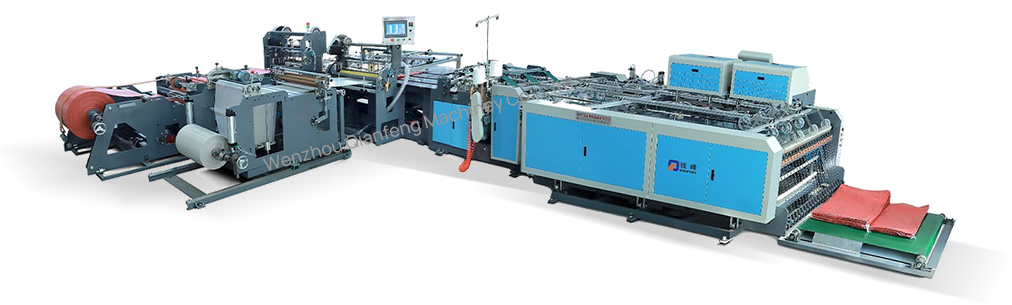
Outer Bag Cutting Length (mm):600-1200
Outer Cloth Width (mm):450-650
Inner Bag Wider than Outer Bag (mm) +20
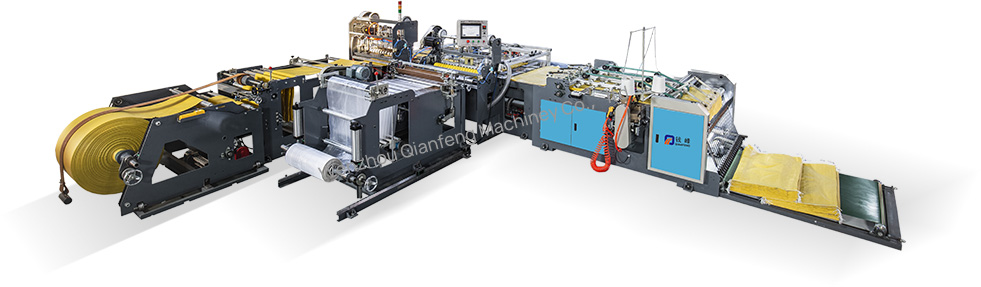
Outer Bag Cutting Length (mm):600-1200
Outer Cloth Width (mm):400-680
GET A QUOTE



 中文
中文 English
 Pусский
 Français
 Español