That’s not an unusual confession. During a site visit last year, a production manager in Nairobi pointed to three idle components on his “fully loaded” PP woven bag line—a servo-driven slitter positioning system, a fifth print station gathering dust, and an automated roll unloading arm that had never worked properly since installation. His honest assessment? “We should have bought a simpler machine and used the savings for an extra forklift and a second shift operator.”
If you’re in the market for a woven bag production setup, you’ve probably seen the pattern. Suppliers show you a brochure packed with options. Every extra feature sounds like insurance against future regret. But here’s what the brochure won’t tell you: over-specifying often creates more problems than it solves.
Based on equipment audits across 23 bag manufacturing plants between 2022 and 2025, plus interviews with production leads who’ve been through the purchase process, here are the five most expensive traps—and exactly how to avoid them.
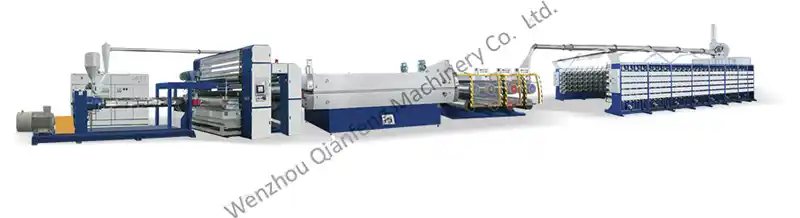
Here’s a common conversation I’ve overheard in purchasing meetings: “What if December orders double? We need the capacity.”
It sounds responsible. But let’s do the math. A 150 m/min line typically costs 60–70% more than an 80 m/min model with comparable build quality. If you run at peak speed only 20% of the time, your cost per bag on the slower line is actually lower—because depreciation, power consumption, and maintenance scale with installed capacity, not utilization.
What actually works: Size for your 80th percentile month, not your 99th. For the remaining 20%, outsource, run overtime shifts, or add a second shift on a simpler line. Every plant manager I’ve spoken with who took this approach said they never regretted it. The ones who over-bought? Many admitted they’d make a different choice today.
How many days per month would you realistically exceed 100 m/min?
Could weekend shifts on a smaller line cover your rare peak demands?
What’s the actual ROI on that extra speed you might never use?
PP woven fabric has a rough, textured surface. That means printing requires a higher ink deposit than smooth films. And that technical challenge makes buyers nervous—so they assume they need a heavy-duty, multi-station press.
But here’s the reality most salespeople won’t volunteer: if you’re running mostly plain bags or simple one-color logos, a two-station flexo printer is not only sufficient—it’s actually superior.
Why? Because each additional print station adds:
Four extra nip rollers that collect polypropylene dust and need daily cleaning
Three additional tension zones where the fabric can stretch or relax unpredictably
At least one extra skill level is required from operators to maintain registration
Real-world example: A textile packaging plant in Bangladesh switched from a six-station printer to a two-station unit. Their changeover time dropped from 55 minutes to 18 minutes. Reject rate from print misregistration? Nearly zero—because with only one or two colors, there’s almost nothing to misregister.
According to the Flexographic Technical Association’s 2022 Substrate Guide, PP woven fabric accepts quality single-color printing at 60–80 m/min using basic two-roller systems. You don’t need chambered doctor blades or automatic viscosity control unless you’re running process-color work or photographic images.
Ask yourself: Of your last 100 orders, how many required more than two colors? If the answer is fewer than 10, skip the extra stations.
Equipment salespeople love the word “modular.” It sounds future-proof and flexible. But here’s the catch: real modularity means you can remove components as easily as you add them. Most so-called modular lines are actually pre-wired for options—meaning you pay for the wiring, the control software licenses, and the floor space even if you never install the optional module.
Consider the slitting section. A unit designed to handle eight width configurations requires wider rollers, longer shafts, more complex bearing housings, and a larger frame than a dedicated four-width slitter. You pay for all that extra mechanical capacity whether you use it or not.
The smarter path: Start with a focused configuration that matches your actual product mix today. Then verify—before signing anything—that adding features later doesn’t require shipping the line back to the factory. Some brands claim modularity but need six weeks of shop time for upgrades. Others allow field installation within a weekend.
To understand how a genuinely scalable platform handles future additions without forcing you to overpay upfront, review the configuration options available before committing to features you may never need.
Automation sounds like free labor. Every sensor, servo drive, and pneumatic cylinder promises to replace a human task. But each also adds a potential failure point—and a potential waiting period for replacement parts or specialized technicians.
I’ve seen a plant with a $4,000 servo drive fail because no one on staff knew how to tune it. The solution options were:
Fly in a technician from the supplier ($5,000 plus travel and lodging)
Ship the drive out for repair (10–14 days downtime)
Bypass the automation and run semi-manually (defeats the purpose)
A practical rule of thumb from experienced production managers: Only automate tasks that occur at least 20 times per shift. Everything else becomes an expensive decoration.
Automatic roll splicing? Yes—this happens constantly.
Automatic pallet changers? Only if you run 24/7 with minimal breaks.
Closed-loop print registration control? Only if you run more than two colors or critical brand work.
The sweet spot for most medium-volume PP bag producers (100,000–500,000 bags monthly) is partial automation—semi-automatic splicing, manual slitting setup with digital position indicators, basic bottoming with photo-eye registration. You save 40–50% compared to full automation while keeping maintenance straightforward for your existing team.
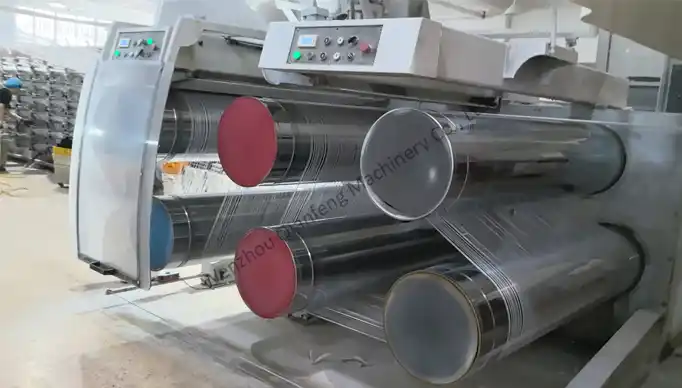
Some buyers request unwinds that handle roll widths from 300mm to 1200mm, plus every core size from 3 inches to 6 inches. On paper, that sounds efficient. In practice, a truly universal unwind compromises tension control at both extremes.
Why this matters for PP woven fabric: Material from different suppliers has different stretch characteristics and coefficients of friction. A wide-range unwind uses longer dancer travel and softer springs to accommodate varying roll weights. But that same soft response means slower tension correction when running lightweight fabric—leading to bag length variations and inconsistent bottom seals.
Better approach from plant managers who’ve learned this lesson: Specify your two most common roll widths and core sizes. Build the unwind specifically for those. For the occasional odd-size roll (maybe 5% of your production), use a simple adapter or outsource those small batches entirely. The efficiency gain from a properly tuned dedicated unwind almost always outweighs the “universal” flexibility.
Beyond the purchase price, over-specified lines create three chronic drains on your P&L:
| Hidden Cost | Real Impact (Based on 12 Plant Interviews) |
|---|---|
| Training churn | Complex lines take 4–6 weeks to reach full productivity. Simple lines: 5–7 days. In high-turnover markets, that difference costs 15–20 production days annually. |
| Spare parts inventory | A line with 40% more features typically requires 80% more unique spare part SKUs. Many of those parts will sit on your shelf until they expire or become obsolete. |
| Energy consumption | Idle stations still consume power. Servo drives in standby, heaters maintaining temperature, control systems polling sensors. These “phantom loads” add 12–18% to electricity bills compared to a right-sized line. |
Instead of starting with a feature list and working backward, try this reverse approach—it’s what several cost-conscious plant managers have used successfully:
Step 1 – Audit your actual production data
Pull your last three months of records: bag sizes, volumes, colors used, changeover frequency, and actual running speeds (not theoretical max from a brochure).
Step 2 – Find your 80th percentile
Identify the 80th percentile for each variable. That’s your realistic target specification. The top 20% of extremes can be handled by overtime, outsourcing, or simple workarounds.
Step 3 – Add exactly ONE “future” feature
Choose one thing you’ll realistically use within 24 months—not five years. One. Not three. Not five.
Step 4 – The Friday night test
For every feature on your spec sheet, ask: “If this breaks on a Friday at 5 PM, can my team diagnose and repair it by Monday at 8 AM?” If the answer is no, reconsider whether you need it.
Using this exact method, a cement bag manufacturer in Egypt cut their equipment quote from 620,000to620,000to415,000. Their first-year output actually increased by 12%—because the simpler line had dramatically less downtime.
When you're ready to translate your actual production data into a realistic specification, explore the modular platform approach that lets you start focused and expand only when your volume genuinely requires it.
Before you put down a deposit, run this short checklist:
Have you run your own PP fabric (not the supplier’s “ideal” sample) through a factory acceptance test?
Does the supplier provide thermal imaging or tension variation reports—or just marketing claims?
What’s the actual lead time for common wear parts like seal jaws and slitting blades? Anything over 10 working days is a risk.
Can their technician access the control system remotely for diagnostics, or is that locked behind an expensive service contract?
Have you called two plants running similar bag types on the same platform—not just the supplier’s showcase references?
Over-specifying feels like buying insurance. It’s the engineer’s instinct to add margin. But in PP woven bag production, every unused feature isn’t insurance—it’s drag. It consumes floor space, operator attention, maintenance budget, and depreciation dollars while delivering zero value.
The most profitable lines I’ve seen across dozens of plant visits aren’t the ones with the longest feature lists. They’re the ones where every component runs near capacity, every shift, every week. That’s not under-specifying. That’s smart specifying.
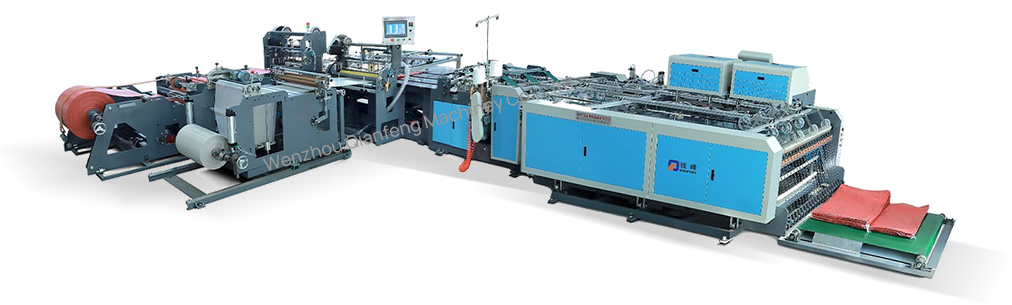
Outer Bag Cutting Length (mm):600-1200
Outer Cloth Width (mm):450-650
Inner Bag Wider than Outer Bag (mm) +20
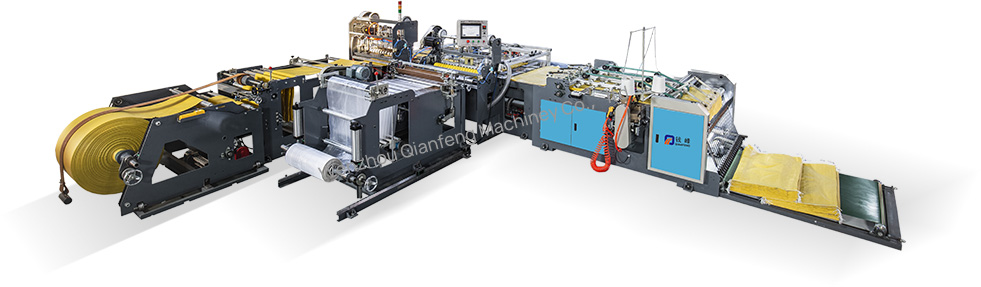
Outer Bag Cutting Length (mm):600-1200
Outer Cloth Width (mm):400-680
GET A QUOTE



 中文
中文 English
 Pусский
 Français
 Español