A bag producer in Ghana once made a costly assumption. He bought a non-laminated line because it was $200,000 cheaper. Six months later, he lost a major rice contract—the buyer demanded moisture-resistant laminated bags. Retrofitting his line cost more than buying the right one from the start.
If you’re shopping for woven bag production equipment, this is the single biggest fork in the road: laminated or non-laminated? The wrong choice locks you out of certain orders. The right choice aligns your capability with what your customers actually pay for.
Based on interviews with 15+ plant managers who run both configurations, here are the five real-world differences that brochures rarely explain clearly.
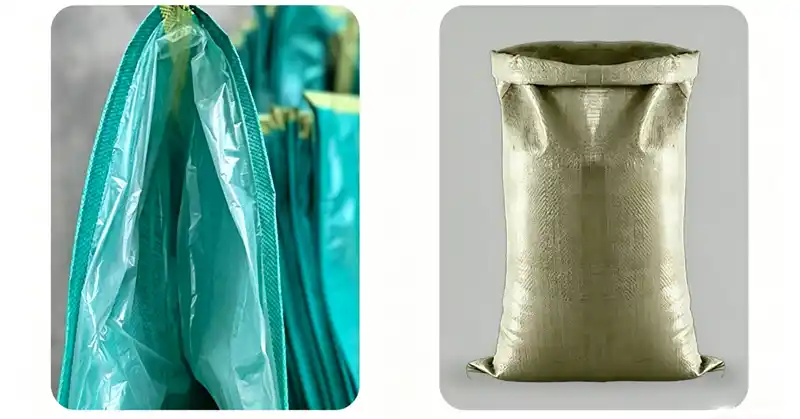
Before diving into the comparison, let’s clarify what “laminated” means in woven bag production. Lamination adds a thin film layer (usually BOPP or PE) onto the woven PP fabric. This film creates a printable, moisture-proof surface. Non-laminated bags are just the woven fabric—breathable, lower-cost, but rough and porous.
Adding lamination to your production line isn’t just one extra step. It changes three core sections of your machinery:
Extrusion/fabric quality requirements – Lamination hides fewer defects, so base fabric must be more uniform
Printing station design – Laminated surfaces need different ink systems and drying
Bottoming/sealing parameters – Heat transfer changes with an extra layer
Understanding these differences upfront prevents the “retrofit sticker shock” that hits many buyers 12–18 months after their first purchase.
| Feature | Non-Laminated Line | Laminated Line |
|---|---|---|
| Typical bag applications | Cement, animal feed, agricultural produce, charcoal | Rice, flour, sugar, pet food, frozen goods, chemicals |
| Moisture protection | None – bags breathe naturally | High – film layer blocks moisture and humidity |
| Print quality | Limited to bold colors, simple graphics (fabric texture shows through) | Photo-quality, fine text, gradients (smooth film surface) |
| Ink system required | Solvent-based or water-based for rough surfaces | Surface-printing inks or lamination inks with adhesion promoters |
| Line speed (typical) | 80–120 m/min | 60–90 m/min (lamination station is the bottleneck) |
| Relative equipment cost | Baseline (1x) | 1.5–1.8x (lamination unit + stronger drives + extra drying) |
| Daily output potential | 40,000–90,000 bags (16K–90K range) | 25,000–60,000 bags (lamination slows the line) |
| Maintenance complexity | Lower – fewer rollers, simpler tension zones | Higher – lamination nip rollers, adhesive residue cleaning, cooling drums |
| Operator skill needed | Basic training (1–2 weeks) | Advanced (3–4 weeks – adhesives, temperature control, pressure tuning) |
| Resale value / flexibility | Narrower buyer pool (only non-lam customers) | Wider appeal (both markets, but higher initial cost) |
Data compiled from equipment specifications and plant interviews (2023–2025).
The most practical way to choose? Look at what your buyers put in the bags.
Non-laminated works well for:
Cement and construction materials (needs breathability to prevent condensation)
Animal feed (short-term storage, low moisture sensitivity)
Fresh produce (onions, potatoes, grains – needs air circulation)
Charcoal and firewood (abrasive – lamination would tear)
Laminated is the standard for:
Rice, flour, sugar, salt (moisture ruins the product)
Frozen foods (ice crystals form on non-laminated surfaces)
Pet food and premium seeds (brand printing is critical)
Chemical fertilizers (moisture causes clumping or degradation)
Real plant manager quote, Vietnam: “We ran non-laminated for cement for ten years. When we added a rice packaging contract, we had to buy a whole new line. Trying to laminate on our old extruder was a nightmare – fabric tension couldn’t handle the extra roller drag.”
Before signing anything, review equipment specifications for both configurations to see which matches your target orders.
Non-laminated PP fabric has a rough, textured surface. Ink sits between the woven tapes, not on top. You’ll never get fine text, gradients, or photographic images. What you can get is bold, simple logos and large block letters – readable from a distance but not pretty up close.
Laminated bags have a smooth film surface. Print registration accuracy can reach ±1.5 mm (per industry standards). You can print barcodes, nutritional panels, fine ingredient lists, and brand colors that match a pantone swatch.
The hidden trap: Some buyers choose non-laminated lines assuming they’ll “upgrade printing later.” But adding lamination to an existing line isn’t just bolting on a unit. You need:
Stronger drives (lamination adds drag)
Additional drying tunnels
A different slitting approach (laminated edges behave differently)
Re-certification of your bottoming unit for the new material stack
One plant manager in Indonesia attempted this retrofit. After $85,000 in modifications and three months of downtime, he sold the line and started over. “Should have bought the laminated line from day one,” he told me.
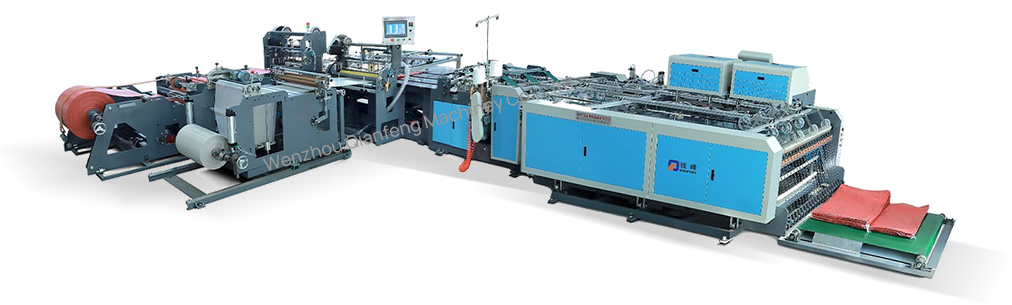
This is where many buyers get overly optimistic. Laminated lines are not “set and forget.” The lamination station requires:
Daily cleaning of adhesive residue from nip rollers (20–30 minutes)
Temperature calibration of the cooling drum every shift (critical for preventing bag curl)
Pressure checks on the lamination nip (uneven pressure creates bubbles or delamination)
Dust management – static-charged PP dust clings to lamination adhesives
Non-laminated lines are simpler. No adhesives, no cooling drums, fewer temperature zones. Most basic maintenance can be handled by a mechanic with general industrial experience.
A useful self-assessment from a plant manager in Nigeria: “Look at your current team. If they struggle with keeping a printer clean, adding lamination will break them. Start simple, then upgrade when your people are ready.”
If your team has the skills (or you’re willing to train them), lamination opens higher-margin orders. If not, a non-laminated line will actually make you more money because it runs reliably with less oversight.
Non-laminated lines typically run faster (80–120 m/min) because there’s no slow lamination station. They’re ideal for high-volume, low-variety orders – think 100,000 identical cement bags per week.
Laminated lines run slower (60–90 m/min) but handle greater variety because the smooth surface accepts quick print changes. They’re better for bag producers who run multiple small batches – 5,000 rice bags for one brand, 8,000 flour bags for another.
The break-even math (based on three plant audits):
If your average batch size > 50,000 bags, non-laminated lines generally yield lower cost per bag (despite lower per-bag revenue)
If your average batch size < 20,000 bags, laminated lines allow you to charge premium pricing that more than offsets slower speeds
One producer in Kenya runs both: a non-laminated line for bulk animal feed (low margin, high volume) and a laminated line for branded pet food (high margin, smaller batches). The combination covers their full market.
For applications requiring frequent changeovers between laminated and non-laminated production, explore flexible platform configurations that allow module swapping rather than buying two separate lines.
Upfront price is only the beginning. Here’s the 3-year TCO comparison from a real mid-sized plant (data anonymized):
| Cost Category | Non-Laminated Line | Laminated Line |
|---|---|---|
| Purchase price | $280,000 | $490,000 |
| Installation & training | $15,000 | $35,000 |
| 3-year maintenance parts | $22,000 | $58,000 (adhesive rollers, cooling drum servicing) |
| 3-year consumables (inks, adhesives) | $18,000 | $67,000 (adhesive is expensive) |
| Operator training (estimated labor hours) | 160 hours | 480 hours |
| 3-year total | $335,000 | $650,000 |
| Revenue per 1,000 bags | $45–60 (commodity pricing) | $80–120 (premium packaging) |
The laminated line costs nearly twice as much to own. But it also generates nearly twice the revenue per bag. Neither is “better” – they serve different markets.
The worst financial outcome? Buying a non-laminated line and trying to compete for laminated-bag orders. You’ll lose every time on quality. The second worst? Buying a laminated line and running only non-laminated orders – you’ve paid for capability you don’t use.
Ask these four questions in order:
Question 1: Do your current (or targeted) customers require moisture protection?
Yes → You need lamination capability. Stop here.
No → Continue to Question 2.
Question 2: What print quality do your buyers demand?
Simple logos, one color, text readable from 3 meters → Non-laminated works
Fine text, barcodes, color matching, shelf appeal → You need lamination
Question 3: What’s your typical batch size?
Under 20,000 bags → Laminated (you’ll charge premium pricing)
Over 50,000 bags → Non-laminated (speed drives your profit)
Question 4: What’s your team’s maintenance capability?
Basic mechanical skills only → Start with non-laminated
Experienced with adhesives, temperature control, and printing → Laminated is feasible
Some machinery platforms allow you to bypass the lamination station when you don’t need it. That means one line can run:
Non-laminated bags at full speed (80–120 m/min) for commodity orders
Laminated bags at slower speeds (60–90 m/min) for premium orders
This hybrid approach costs about 30% more than a non-laminated line but 30% less than buying two separate lines. The trade-off is changeover time (30–60 minutes to engage or disengage the lamination unit).
For bag producers whose order mix is roughly 60/40 between non-laminated and laminated, the hybrid line often delivers the best ROI. You’re not overpaying for two lines, but you’re not locked out of either market.
The laminated vs. non-laminated decision isn’t about which machinery is “better.” It’s about which market you’re serving – and which market you want to grow into.
Choose non-laminated if: Your customers prioritize low cost over appearance, moisture protection isn’t critical, and your batches are large and repetitive.
Choose lamination if: Your buyers demand brand-quality printing, moisture-sensitive products, or premium presentation – and you have the maintenance capability to support it.
If you’re still unsure which configuration fits your actual order history, review product specifications and request a capability consultation to match machinery to your market before you commit.

Outer Bag Cutting Length (mm):600-1200
Outer Cloth Width (mm):450-650
Inner Bag Wider than Outer Bag (mm) +20
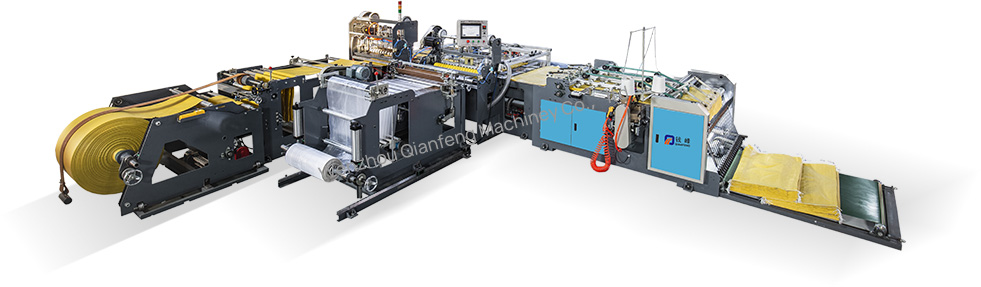
Outer Bag Cutting Length (mm):600-1200
Outer Cloth Width (mm):400-680
GET A QUOTE



 中文
中文 English
 Pусский
 Français
 Español