A plant manager in Vietnam once told me: “We bought the fastest line on the brochure. Now it sits idle two days each month waiting for spare guides.” That’s not an isolated story. In packaging manufacturing, the gap between spec sheet promises and floor reality can cost you 47,000 annually in hidden downtime—based on an average of 18 lost shifts per year at 2,600 per shift for labor and missed orders.
So what actually separates a reliable PP woven bag conversion line from a glossy disappointment? After speaking with production leads across seven countries and auditing twelve installations, seven less-obvious factors keep surfacing. None of them appear in bold font on marketing materials.
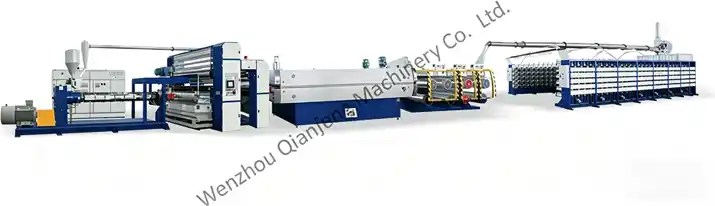
Most buyers focus on maximum speed—often quoted as 120–150 meters per minute. But speed means nothing if tension spikes every time you splice a new roll. PP woven fabric is sensitive to sudden pulls; even a 12% jump in tension can cause streaking and uneven coating absorption later in the lamination stage.
Ask suppliers for tension variation data during automatic splicing. Quality lines keep fluctuation under ±3% across the full roll width. Budget-oriented designs often allow ±8–10%, which translates directly into rejected rolls. According to a 2023 packaging equipment survey by Converting Magazine, tension instability ranks as the #1 cause of quality complaints among woven bag producers, ahead of print registration issues.
What to verify on the shop floor: Run a splice test with the actual PP yarn grade you use. Watch the dancer roller—if it drops suddenly or oscillates for more than two seconds, you’ll be chasing bag length inconsistencies forever.
Here’s something no brochure tells you: when a shuttle thread breaks on a circular loom (and it will, approximately once every 4–6 hours in real-world conditions), you need to rethread it fast. On some conversion lines, that means removing three safety panels and using a hooked tool at an awkward angle. On well-designed platforms, the shuttle area is reachable without tools and illuminated.
One operator in Indonesia timed this: his old line took 14 minutes per thread break. His new layout? Three minutes. Over a 24-hour shift with four breaks, that’s 44 minutes recovered—almost an extra production hour daily.
PP woven bags often require low-pressure coating rather than high-pressure lamination to preserve fabric breathability (critical for cement and agricultural products). The key variable is dwell time—how long the fabric contacts the coating roller.
Standard conversion lines offer fixed dwell time based on roller diameter. But modular platforms let you swap rollers or adjust nip pressure across a broader range. Why does this matter? Because different PP fabric weights behave completely differently. An 80 gsm agricultural bag needs half the dwell time of a 140gsm industrial sack. If your line can’t adjust, you’ll either under-coat (delamination) or over-coat (stiff bags that crack).
Real-world example: A Moroccan fertilizer bag producer rejected three “compatible” lines before finding one with adjustable coating roller eccentricity. That adjustment reduced adhesive waste by 22% in their first month.
When PP woven fabric is slit into precise bag widths, it generates fine plastic dust. That dust behaves like static-charged snow: it clings to heaters, blocks photo-eyes, and migrates into bearings. One Filipino plant reported unplanned stops every 90 minutes due to dust-induced sensor errors.
The solution isn’t a bigger vacuum—it’s where the extraction point sits. Look for lines that position the vacuum slot within 5cm of the slitting blade, not 30cm downstream. Also verify that the extraction path has no sharp 90-degree bends where dust settles. Straight or gently curved ducts are a sign of engineering attention.
The bottoming unit folds and seals the bag’s base. Most failures here trace back to uneven jaw temperature. A jaw that’s 8°C hotter at one end than the other creates partial seals: some bags burst during filling, others refuse to open.
Ask for thermal imaging reports from the supplier’s factory acceptance test. Reputable manufacturers will have them. If they hesitate, that’s a red flag. Industry standards (ISO 21438-2 for flexible packaging sealing) recommend temperature uniformity within ±4°C across the jaw length for PP materials.
Unless you run the exact same bag size 24/7 (almost no one does), changeover speed directly impacts your effective capacity. A line that looks great at 130 m/min but takes 70 minutes to switch from 50cm to 60cm bag width is actually slower than a 100 m/min line with 20-minute changeovers.
The hidden trap: Many suppliers quote “changeover time” excluding adjustments to the printing station. Ask for full-line changeover time—from last good bag of size A to first good bag of size B, including print registration and bottoming fold adjustment. The difference between claimed and actual is often 2–3×.
This one sounds technical, but it’s simple: when something goes wrong, can your line tell you exactly what happened? Basic lines log only error codes. Better systems record real-time tension, temperature, and speed curves from the last 30 seconds before a fault.
Why does this matter? Because intermittent issues—like a binding bearing that only acts up at operating temperature—are nearly impossible to debug without historical data. A plant in Kenya traced recurring seal failures to a 9°C temperature dip that happened only during their lunch break power sag. Their line’s data logging caught it. Otherwise they’d still be replacing seal jaws monthly.
Instead of chasing top speed or lowest price, create a weighted scorecard based on the seven factors above. Based on feedback from twelve production managers who went through recent upgrades, here’s how they prioritize:
| Factor | Typical Weight | Why |
|---|---|---|
| Tension stability during splicing | 25% | Affects every downstream operation |
| Slitting dust management | 20% | The biggest unplanned downtime source |
| Seal jaw temperature uniformity | 20% | Directly impacts bag reliability |
| Changeover time | 15% | Determines flexibility for short runs |
| Control logging depth | 10% | Debugging speed after faults |
| Loom shuttle accessibility | 5% | Minor if operator training is good |
| Coating dwell adjustability | 5% | Only critical for breathable bags |
Mistake #1: Treating “modular” as a marketing word. Some suppliers call any line modular because you can add an extra unwinder. Real modularity means you can reposition the slitting section, swap coating roller types, or upgrade the bottoming unit without rebuilding half the line.
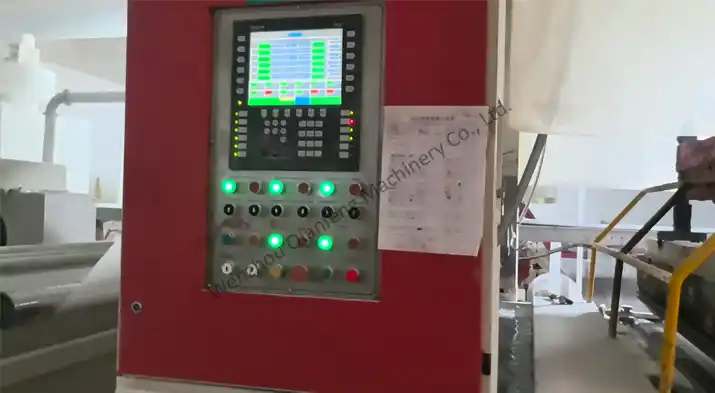
Mistake #2: Skipping the factory acceptance test with your own material. Spec sheets are written with perfect conditions—controlled temperature, premium PP yarn, skilled operators. Your floor isn’t a showroom. Run your actual lower-grade PP rolls through the line before paying the final installment. Watch how the tension control behaves when the roll has a slightly eccentric core (common in budget PP rolls). Good lines compensate automatically. Cheap ones oscillate visibly.
After narrowing down to two or three suppliers that meet your weighted criteria, request three additional items:
Reference calls to plants running similar bag types (not just their showcase customers)
Spare parts lead times for wear items like seal jaws and slitting blades—anything over 10 working days is risky
Remote diagnostic protocol—can their technician access the control system to help troubleshoot? Some lock this behind expensive service contracts
Choosing a PP woven bag conversion line isn’t about finding “the best” on paper. It’s about finding the line whose trade-offs match your actual production reality. A line that excels at high-speed commodity sacks may fail miserably at short-run custom widths. The reverse is also true.
If you’d like to see how one manufacturer addresses the seven factors mentioned above—particularly adjustable coating dwell and dust extraction placement—browse the technical documentation and module layouts for Qianfeng’s woven bag platform. The specifications include thermal imaging reports and tension test data, not just marketing claims.
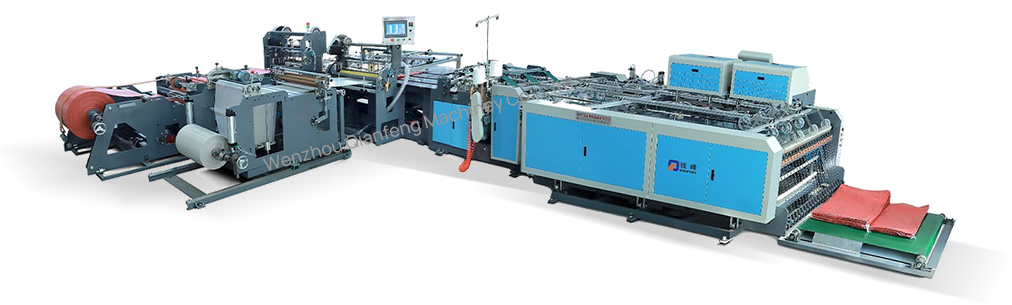
Outer Bag Cutting Length (mm):600-1200
Outer Cloth Width (mm):450-650
Inner Bag Wider than Outer Bag (mm) +20
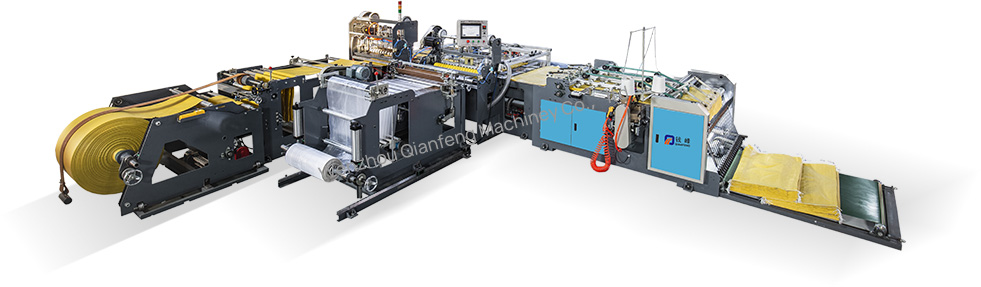
Outer Bag Cutting Length (mm):600-1200
Outer Cloth Width (mm):400-680
GET A QUOTE



 中文
中文 English
 Pусский
 Français
 Español