If you're searching for machinery to produce BOPP laminated bags, you likely want to know one thing upfront: which converting equipment delivers consistent lamination strength, high-speed output, and minimal material waste without constant downtime. The short answer is a modular converting line that integrates printing, lamination, slitting, and bottoming in one continuous workflow. But not all machines advertised as "multi-functional" actually deliver on that promise—especially when handling heat-sensitive BOPP films.
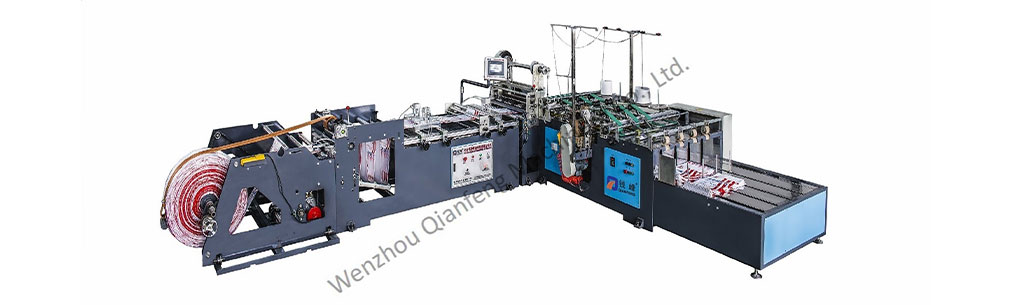
Many bag manufacturers start with separate machines for each process—printing on one unit, laminating on another, then moving rolls to a slitter and finally a bottomer. This fragmented approach creates three hidden drains on your bottom line. First, roll handling between stations introduces dust, scratches, and edge misalignment. Second, repeated tension changes stretch the BOPP film unevenly, causing "bag twist" later. Third, skilled operators spend hours recalibrating instead of supervising quality.
From speaking with plant managers in Southeast Asia and South America, the breaking point usually comes when rejects exceed 5-7% on high-volume orders. That's when they start looking for an integrated solution that eliminates inter-station variability.
Let's put numbers on it. Based on industry benchmarks from bag converting forums and equipment audits, a mid-sized line producing 2 million bags per month loses roughly $1,200–$1,800 daily when a lamination station goes down. That's assuming you have backup slitting capacity. If you don't, losses climb to $3,000+ per day plus late-delivery penalties.
What frustrates most buyers isn't the breakdown itself—it's the lack of modular troubleshooting. Traditional lines force you to shut down everything to access one roller. Smart layouts allow individual stations to be isolated, so you're not sacrificing printing uptime while fixing a lamination nip roller.
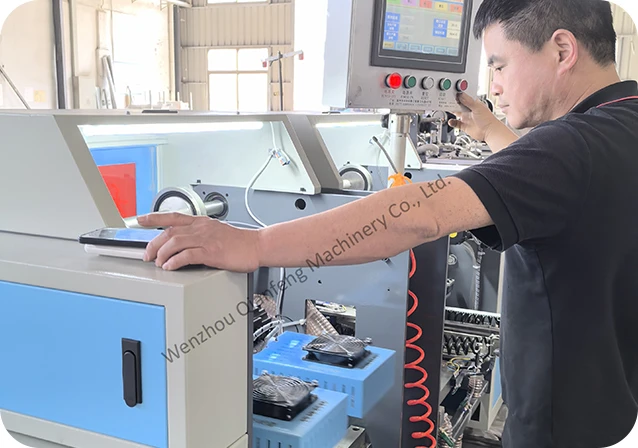
Consider these three real customer scenarios:
Scenario A: The food packaging brand switching from wax-coated paper to clear BOPP laminated bags for frozen dumplings. Their challenge wasn't speed—it was cold-temperature seal integrity. Standard lamination equipment applied uneven pressure at low dwell times. They needed a converting line with independent heating zones on the laminating section.
Scenario B: The agricultural chemical company needing UV-resistant outer bags with high-opacity white lamination. Their existing slitter created dust that contaminated the adhesive layer. The fix wasn't a new slitter but repositioning the slitting stage after lamination—a layout change impossible on rigid monoblock machines.
Scenario C: The e-commerce fulfillment center wanting to produce custom-sized BOPP laminated bags on demand. They didn't need 100m/min speeds. They needed quick width changes (under 8 minutes) and a bottoming unit that handles both pinch and gusseted seals. Standard equipment assumed you'd sacrifice one capability for the other.
These scenarios share a common thread: the answer wasn't a single "magic" machine but a convertible platform where the sequence of modules could be rearranged.
Off-the-shelf converting lines look attractive on initial quotes—typically 30-40% cheaper than semi-custom setups. But here's what the price comparison hides: standard lines force you to accept fixed unwind stand positions, pre-determined lamination nip angles, and limited access for cleaning. When you're running adhesive-based lamination (the most common for BOPP), residue buildup requires daily cleaning. If you can't reach the nipping rollers without dismantling guards for 45 minutes, that's pure waste.
Customization doesn't mean starting from scratch. It means selecting from proven sub-assemblies:
Unwind stands with auto-splicing for non-stop operation
Corona treaters positioned either before printing or before lamination (not both—that's overkill)
Lamination sections with either rubber-coated or chromed nipping rollers depending on adhesive type
Slitting units that can be moved from pre-lamination to post-lamination position
One often overlooked feature: dust extraction ports positioned directly at the slitting blade. BOPP film generates fine static-charged dust that ruins lamination bonding if not removed immediately. Most standard machines place extraction 30-40cm away—too far to be effective.
After evaluating fragmented lines, many production managers assume the solution is upgrading individual components—a faster printer here, a heavier-duty laminator there. That approach rarely works because the bottleneck shifts unpredictably. Upgrade your slitter, and suddenly the unwinder's tension control becomes the weak link. Upgrade tension control, and the cooling section after lamination can't keep up.
This is precisely where BOPP laminated bags converting equipment designed as an integrated system outperforms piecemeal upgrades. Instead of optimizing each station in isolation, integrated platforms balance throughput across all stages. For example, if the laminating section runs at 80m/min maximum for adhesive curing, the printer and slitter automatically cap their speeds to match—no accumulation jams, no operator guessing.
Compared to building a line from separate used machines (popular on a tight budget), integrated systems typically reduce:
Changeover time by 55-70% (since one control interface manages all stations)
Material waste from 6-9% down to 2-4% (tension stays consistent from unwind to rewind)
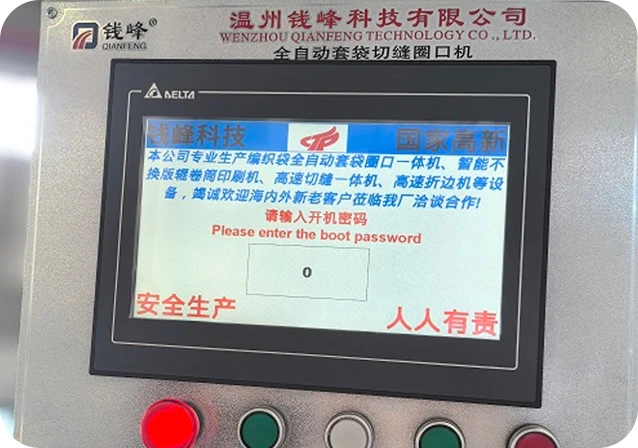
Training hours by half—operators learn one touchscreen instead of four different panel layouts
The trade-off? Upfront cost is higher, and you can't easily replace a single station with a different brand later. But for dedicated BOPP laminated bag production—not a job shop running varied materials—integration pays off within 12-18 months through waste reduction alone.
Before evaluating quotes, gather these three real-world metrics from your current line (or a similar one if you're new to BOPP lamination):
Tension variation across the roll width at the lamination nip. Anything above ±2% creates bubbles or delamination later. Ask potential suppliers to demonstrate their real-time tension mapping during a factory acceptance test.
Cooling drum surface temperature consistency post-lamination. BOPP film needs rapid cooling to set the adhesive without shrinking. Check for hot spots—more than 3°C variation causes gauge bands.
Edge trim removal reliability. Thin BOPP trimmings easily wrap around idler rollers if the vacuum extraction isn't positioned precisely at the shear point. This is the #1 cause of unscheduled stops in real production, yet rarely discussed in brochures.
For detailed specifications on modular designs that address these three failure points, explore the module configurations available that allow you to reposition the slitting cassette and add secondary dust extraction.
If your current line has less than 5,000 operating hours, rebuilding components might make sense. But once you exceed that threshold—especially with BOPP's abrasive nature—bearings, nipping rollers, and chill drums develop micro-wear that no rebuild can fully eliminate. The telltale sign is inconsistent bag length even when the encoder says feed rates are perfect.
A fresh integrated platform offers something rebuilding cannot: predictive maintenance data. Modern converting equipment logs nip pressure, temperature gradients, and bearing vibration. When a parameter drifts, you get an alert before a catastrophic failure occurs. For high-volume BOPP laminated bag producers, this alone justifies the investment.
Still unsure whether you need a full line or just targeted upgrades? See case studies from similar bag manufacturers who started with a partial replacement and later expanded—their ROI timelines might surprise you.
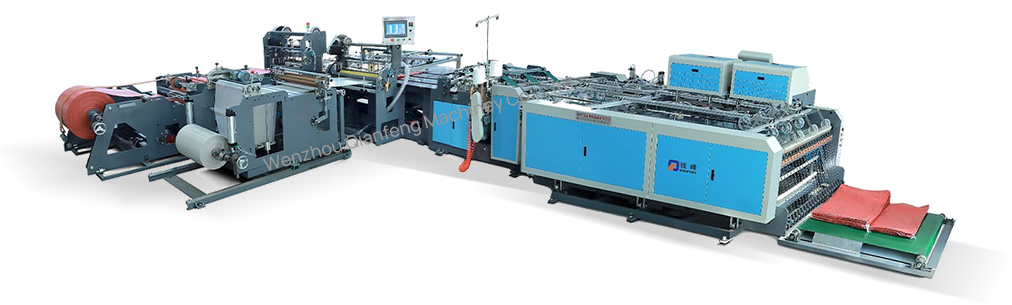
Outer Bag Cutting Length (mm):600-1200
Outer Cloth Width (mm):450-650
Inner Bag Wider than Outer Bag (mm) +20
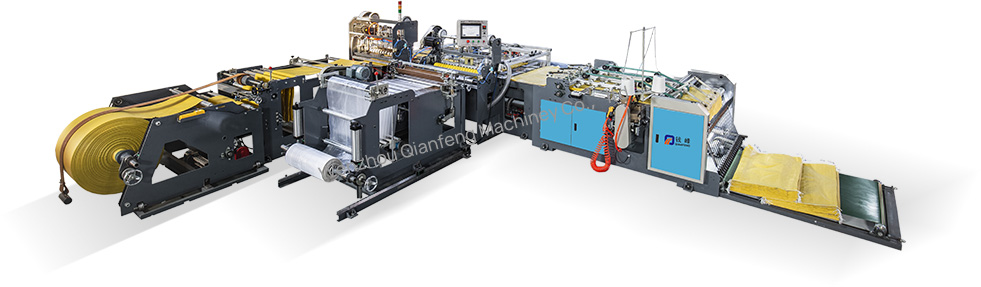
Outer Bag Cutting Length (mm):600-1200
Outer Cloth Width (mm):400-680
GET A QUOTE



 中文
中文 English
 Pусский
 Français
 Español