You have probably seen it: along the cut edge of a PP woven bag, loose threads start separating. At first it is just a cosmetic issue. Then the fraying worsens during filling, causing thread jams on your packaging line or an unprofessional look that your customers notice.
Edge fraying is not inevitable. The cutting method you choose—hot cutting or cold cutting—directly determines how cleanly the woven fabric edge seals or frays. But neither method is universally “better.” The right choice depends on your bag material, lamination type, and downstream handling.
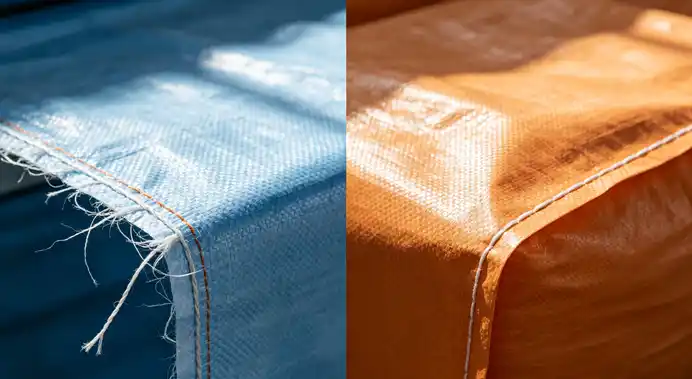
This guide explains how each cutting method works, what edge quality to expect, and which bag types match each method best.
Woven PP fabric is made by interlacing flat tapes (oriented yarns). When you cut across these interlaced tapes, the cut ends are no longer held in place by the weave structure. Without any edge sealing, individual filaments can pull out, creating the classic “frayed” appearance.
The severity of fraying depends on three factors:
| Factor | Why It Matters |
|---|---|
| Fabric weave density | Looser weave (fewer warp/weft threads per inch) allows more yarn movement at the cut edge |
| Tape thickness | Thinner tapes fray more easily because they have less material stiffness |
| Edge treatment | Unsealed edges allow yarns to pull out; sealed edges lock cut ends in place |
According to a 2022 technical bulletin from the American Society for Testing and Materials (ASTM D6190) on standard test methods for woven polypropylene fabrics, edge stability is classified by how many individual yarns can be pulled from a cut edge under light tension—a direct predictor of in-service fraying performance.
This is where the choice between hot cutting and cold cutting becomes critical.
How it works: Cold cutting uses a sharp blade—either a straight knife or a rotating flying knife—to physically shear the woven fabric without applying heat. The cut is clean at the moment of cutting, but the cut ends remain unsealed.
Edge result: Initially smooth, but the exposed yarn ends can gradually pull out under vibration, handling, or filling line tension.
Cold cutting works well for woven bags that will not experience significant edge stress, or where the cutting edge is later folded and sewn into a hem.
| Bag Type | Why Cold Cutting Fits |
|---|---|
| Non-laminated PP sacks (feed, seed, fertilizer) | Cut edge is folded into the bottom hem and stitched—fraying is mechanically contained |
| Bags printed with heat-sensitive inks | No heat means no risk of ink discoloration at the cut line |
| High-speed cutting of standard woven rolls | Cold knives can run at very high line speeds without waiting for heat cycles |
Limitation to understand: If the cut edge remains exposed (e.g., open-top bags without hemming), cold cutting allows progressive fraying during transport and filling.
For bag types where cold cutting is preferred, standalone cutters are available. See the single-function machines section for cutting-specific equipment configurations.
How it works: Hot cutting uses a heated blade or wire to melt through the woven fabric. As the blade penetrates, it simultaneously melts the cut ends of the PP tapes, fusing them together into a sealed edge.
Edge result: A consolidated, slightly thickened edge where individual tapes are bonded. Fraying is virtually eliminated because no loose ends remain.
Hot cutting is particularly valuable for bag types where the cut edge remains visible or subject to handling stress.
| Bag Type | Why Hot Cutting Fits |
|---|---|
| Laminated bags (PE coated, BOPP laminated) | For laminated bags, the suitable cutting method depends on the lamination material and edge exposure requirements. BOPP laminated bags are commonly cold cut to avoid film distortion caused by heat, while PE-coated bags may use either hot cutting or cold cutting depending on production requirements. |
| Open-top bags without hemming | The sealed edge prevents fraying during filling and customer handling |
| Valve bags with precise edge requirements | Clean, sealed edge is essential for proper valve formation |
| Bags for automated filling lines | No loose threads means no jams in filling spouts or conveyors |
A 2021 study on woven polypropylene edge treatment methods published in the Journal of Plastic Film & Sheeting found that hot-cut samples retained over 95% of their edge integrity after 500 cycles of simulated handling, while cold-cut unsealed samples showed visible fraying within 50 cycles (Journal of Plastic Film & Sheeting, Vol 37, Issue 3).
Limitation to understand: Hot cutting requires precise temperature control. Too hot, and the melted edge becomes brittle or forms hard nodules. Too cool, and the edge does not seal properly.
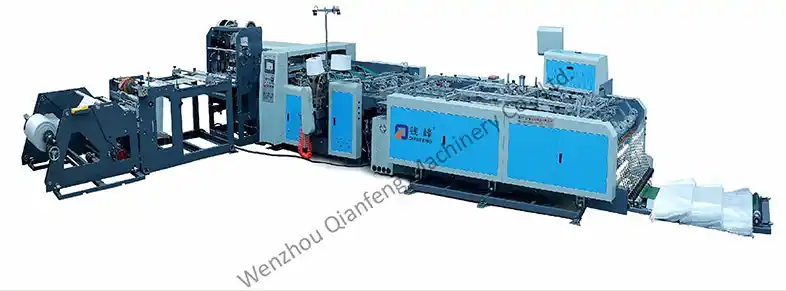
For laminated or open-top bags where hot cutting is recommended, integrated converting lines with automatic hot/cold switching provide flexibility. Explore the fully automatic bag conversion line series for dual-mode capabilities.
Here is how the two methods compare across the factors that matter for woven bag production.
| Comparison Factor | Cold Cutting | Hot Cutting |
|---|---|---|
| Edge appearance | Clean but open; individual yarns visible | Sealed, consolidated edge; no visible loose ends |
| Fraying resistance | Low to moderate (depends on handling) | High to very high |
| Best for non-laminated PP | Yes—especially when edge will be hemmed | Also works, but may add unnecessary heat |
| Best for laminated/BOPP | Commonly used for BOPP laminated bags, especially in high-speed production | Hot cutting may be preferred for some PE-coated or exposed-edge applications |
| Best for open-top bags | No—fraying will occur over time | Yes—sealed edge lasts |
| Line speed potential | Very high (no heat cycle delay) | Moderate (blade temperature must recover) |
| Blade/tool wear | Mechanical wear (sharpening required) | Heat wear (element replacement over time) |
| Operating complexity | Simple—just sharp blades | Requires temperature monitoring and adjustment |
Consider a bag manufacturer producing BOPP laminated woven sacks for cement. The lamination is pre-printed with branding. Initially, the producer used cold cutting because it was fast and simple. But two problems emerged:
Edge delamination: At the cut line, the BOPP film separated from the woven substrate, creating an unsealed edge where moisture could wick into the cement.
Fraying at filling: The cut edge exposed woven yarns, and during cement filling, vibration caused yarns to pull out—some fell into the cement, others jammed the filling spout.
Switching to hot cutting solved both issues. The heat sealed the BOPP lamination to the woven layer at the cut edge, preventing delamination. Simultaneously, the melted edge locked all yarn ends in place, eliminating fraying.
Key takeaway: For some laminated bags—especially exposed-edge or high-stress applications—hot cutting can improve edge stability and reduce fraying. However, many BOPP laminated bags are successfully produced using cold cutting to preserve edge appearance and avoid film deformation.
Use this four-question framework to decide.
| Question | Cold Cutting Answer | Hot Cutting Answer |
|---|---|---|
| Is your bag laminated (PE coated, BOPP, or kraft paper)? | Not recommended | Yes—required for edge seal |
| Will the cut edge remain exposed (no hem or fold)? | Not recommended—fraying risk | Yes—sealed edge solves this |
| Does your bag use heat-sensitive printing? | Yes—no heat damage | Not recommended for that ink type |
| Is your priority maximum line speed? | Yes—cold cutting is faster | Consider a hybrid line with both options |
Some production environments require flexibility—non-laminated bags one day, laminated bags the next. For these situations, converting lines with automatic hot/cold cutting switching allow operators to select the method per batch without changing tooling. This is particularly valuable for contract manufacturers serving diverse bag customers.
For a deeper look at how integrated lines manage cutting method switching and other variable parameters, the woven bag production line overview provides broader context on upstream and downstream integration.
Cutting method is one piece of the edge quality puzzle. For bags where edge appearance is critical—such as retail-ready open-top bags or valve bags with tight dimensional requirements—other factors also matter: tension control during feeding, blade condition monitoring, and post-cut handling that does not stress the fresh edge.
Once you have determined whether hot cutting or cold cutting matches your bag material and application, the next logical step is evaluating specific equipment that offers the cutting mode you need—and whether a single-mode or dual-mode (switchable) line better fits your production mix.
Once you have clarified your material type (non-laminated vs. laminated) and edge exposure requirements, comparing specific machine specifications becomes meaningful. You can review configurations optimized for cold cutting only, or dual-mode lines that handle both laminated and non-laminated bags with automatic cutting method switching.
To continue building your edge quality and cutting process knowledge, here are suggested topics that complement this guide:
Blade Maintenance for Cold Cutters: How Dull Blades Increase Fraying
Temperature Control in Hot Cutting: Avoiding Brittle Edges and Burn Marks
Laminated Bag Converting: Why Cutting Method Affects Moisture Barrier Performance
Tension Control and Edge Quality: How Feed Consistency Reduces Jagged Cuts
Open-Top Bag Design: Sealed Edges vs. Hemmed Edges for Different Fillings
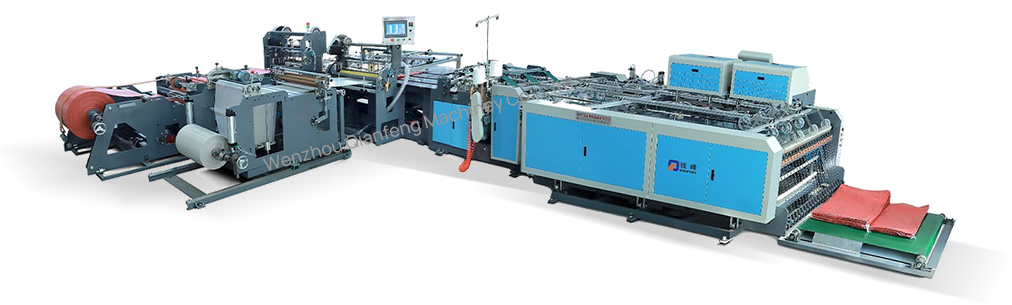
Outer Bag Cutting Length (mm):600-1200
Outer Cloth Width (mm):450-650
Inner Bag Wider than Outer Bag (mm) +20
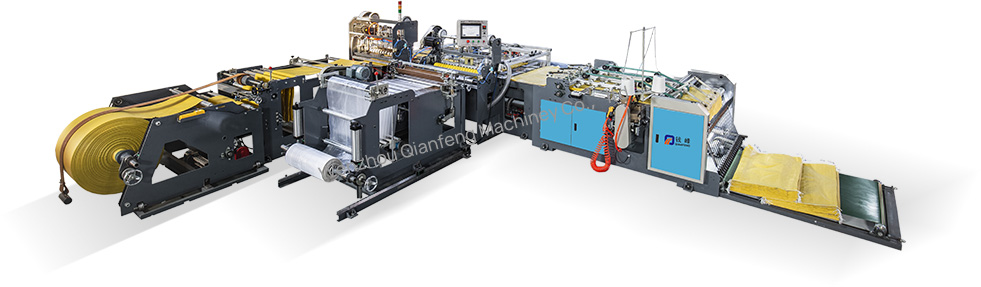
Outer Bag Cutting Length (mm):600-1200
Outer Cloth Width (mm):400-680
GET A QUOTE



 中文
中文 English
 Pусский
 Français
 Español