Unlike standard open-mouth bags that are sewn closed after filling, valve bags arrive at the filling line with a pre-formed sleeve (valve) built into the top or corner. The filling nozzle inserts directly into this valve, and the bag self-closes when withdrawn—no stitching, no tape, no additional sealing step.
This efficiency advantage makes valve bags the standard for high-volume applications like cement, chemicals, minerals, and animal feed. But the same valve that enables fast filling also demands precision during bag converting. A poorly formed valve leaks product, jams filling spouts, or fails to self-close.
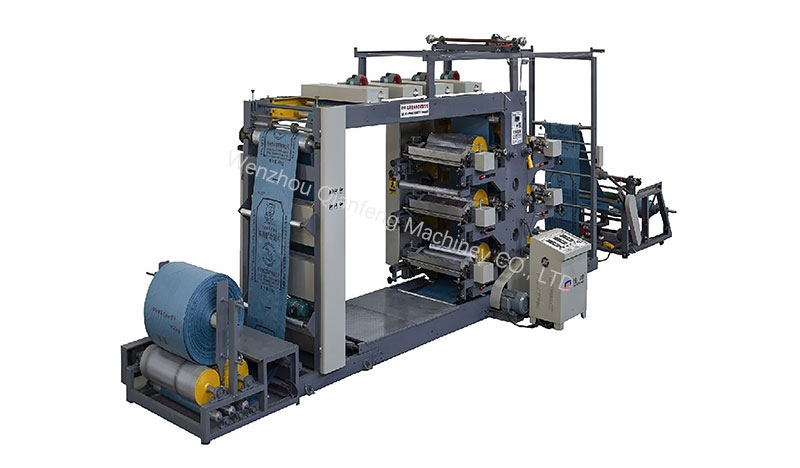
This guide covers the essential converting features for valve bag production—from cutting and folding to sealing and inspection—and explains which features are non-negotiable for cement and chemical applications.
Before examining converting features, it helps to understand the two main valve bag architectures.
| Feature | Open-Mouth Bag | Valve Bag |
|---|---|---|
| Filling method | Bag held open; product dropped in | Nozzle inserted into pre-formed valve |
| Closing method | Sewn, heat-sealed, or taped after filling | Self-closes when nozzle withdraws |
| Valve location | None | Typically top center, top corner, or side |
| Converting complexity | Moderate | Higher (requires valve forming station) |
| Filling line speed | Slower (bag handling + closing step) | Faster (insert, fill, withdraw) |
According to a 2023 industry report on cement packaging trends from the World Cement Association (WCA), valve bags now account for over 60% of cement packaging globally, driven by automated high-speed filling lines that can process 2,000–3,000 bags per hour. The same report notes that valve bag defects—primarily poor valve formation—remain the leading cause of filling line stoppages.
The message is clear: valve bag converting is not a margin for error.
The valve itself is a folded sleeve of woven material, typically located at the top of the bag. During converting, the machine must:
Cut the bag to length from a woven roll
Fold the top edge to create a valve pocket (usually a single or double fold)
Adhere or stitch the fold to secure the valve shape
Cut the valve opening (if not created by the fold design)
| Feature | Why It Matters for Cement/Chemical Sacks |
|---|---|
| Adjustable fold depth | Valve length must match the filling nozzle specifications (typically 80–150mm) |
| Consistent fold alignment | Misaligned valves cause off-center filling, product spillage |
| Low-friction folding surfaces | Prevents abrasive damage to laminated or coated materials |
| Quick changeover between valve sizes | Chemical sacks may use different valve dimensions than cement sacks |
Converting lines with integrated valve folding capabilities are part of the fully automatic bag conversion line series , which can include top folding stations for valve bag production.
For cement and chemical sacks, the valve edges must be sealed—not just cut. Here is why:
Cement dust: Fine cement particles will escape through any unsealed woven edge at the valve opening, creating dust and product loss
Chemical fines: Hygroscopic or hazardous chemicals require complete containment
Valve integrity: Unsealed valve edges fray during filling nozzle insertion, causing jams
Hot cutting seals the cut edges of the woven material by melting the PP tapes together. For valve bags, this sealing must occur precisely at the valve opening and along the folded valve edges.
Research published in the International Journal of Environmental Science and Technology (Vol 19, 2022) on dust emissions from cement packaging operations found that switching from cold-cut to hot-cut valve bags reduced airborne particulate matter at the filling station by approximately 40–55%, primarily by eliminating edge fraying and yarn pull-out at the valve opening (IJEST, Volume 19, pp 2437–2448).
For cement plants subject to occupational dust exposure limits (e.g., OSHA Permissible Exposure Limit of 15 mg/m³ for total dust), this reduction is operationally significant.
| Requirement | Why |
|---|---|
| High temperature consistency | Valve folds create multiple layers; heat must penetrate all layers for a full seal |
| Zoned heating | Only the valve area may need sealing; the bag body may remain cold-cut |
| No brittle edge formation | Overheating creates hard nodules that can crack or damage filling equipment |
For bag types requiring both valve folding and hot cutting, integrated converting lines with dual-mode cutting provide the necessary flexibility. See the PP woven bag production line overview for how upstream extrusion and weaving feed into converting.
Cement and chemical sacks are often filled with fine particulate materials that can leak through stitched seams. While some valve bags use stitched bottoms, many applications require a fully sealed bottom.
| Method | How It Works | Best For |
|---|---|---|
| Hot air sealing | Heated air melts the inner coating or liner, bonding layers together | Laminated or coated woven bags |
| Adhesive tape sealing | Pressure-sensitive or heat-activated tape applied over the seam | Bags requiring high dust containment or moisture resistance |
The choice between stitching and sealing depends on the product:
Cement: Often uses stitched + taped or fully heat-sealed bottom because cement dust finds every gap
Fertilizer: May use stitched only (less critical containment)
Fine chemicals: Typically requires adhesive tape or heat sealing for complete containment
A 2021 technical guide from the Flexible Intermediate Bulk Container Association (FIBCA) on valve bag specifications notes that bottom sealing method is the single largest determinant of dust-tight performance, with fully sealed bottoms achieving particle retention rates above 99.5% versus 90–95% for stitched-only bottoms in fine powder applications.
For certain valve bag applications, two additional converting features may be required.
Some valve bags include a perforated tear line above the valve to allow controlled opening. This is more common in consumer-facing valve bags (e.g., pet food, charcoal) but occasionally specified for industrial sacks where bag reuse or emptying requires clean opening.
Converting requirement: Rotary perforation unit with adjustable blade depth (must not penetrate through the entire bag wall)
Valve bags for certain chemical or mineral products may be designed with cut handles for manual handling during palletizing or customer use.
Converting requirement: Die punch unit synchronized with bag indexing; handles must not intersect the valve area
Use this checklist to evaluate whether a converting line or configuration is suitable for cement or chemical valve bag production.
| Feature | Required for Cement? | Required for Chemicals? | Notes |
|---|---|---|---|
| Valve top folding station | Yes | Yes | Non-negotiable for valve bag production |
| Hot cutting (at valve only or full edge) | Yes | Yes | Sealed valve edges prevent dust/fines escape |
| Bottom sealing (adhesive tape) | Recommended | Often required | Stitched-only bottoms may leak fine particles |
| Bottom sealing (heat) | Optional | Application-specific | Works best with coated/laminated materials |
| Perforation | No | Rare | Only if specified for consumer opening |
| Handle punching | Rare | Rare | Typically only for manual handling applications |
| Automatic hot/cold cutting switching | Valuable | Valuable | If producing both valve and open-mouth bags on same line |
| Inspection (valve integrity check) | Recommended | Recommended | Detects mis-folded or missing valves before shipping |
Consider a cement producer requiring 1,500–2,000 valve bags per hour. The bag specification:
BOPP laminated woven fabric (printed with branding)
Top valve, 120mm depth, centered
Bottom heat-sealed with adhesive tape over the seal
No perforation or handles
| Feature | Why Selected |
|---|---|
| Hot cutting (full-width) | Seals cut edges of BOPP lamination; prevents delamination |
| Top folding station with adjustable depth | Creates consistent 120mm valve pocket |
| Bottom heat + tape sealing | Double containment for cement dust; heat seals, lamination, and tape reinforces |
| Automatic tension control | Prevents distortion of printed registration during folding |
| Valve inspection sensor | Confirms each bag has formed valve before stacking |
A line without hot cutting would produce bags with unsealed BOPP edges—delamination would occur at the cut line. A line without bottom tape sealing would risk dust leakage through the stitched seam. Both missing features would lead to customer rejection.
Note on transitioning to product information: Once you have identified the required converting features for your valve bag application (valve folding, cutting method, bottom sealing, and any optional features), comparing specific machine configurations becomes the logical next step. You can review which integrated lines include valve stations and which cutting modes they support.
Valve bag production for cement and chemical sacks is not a standard open-mouth converting job, adapted slightly. It requires intentional feature selection:
Valve folding station (with adjustable depth and consistent alignment)
Hot cutting for sealed valve edges and dust containment
Bottom sealing (tape or heat) appropriate for the product
Inspection capability to detect valve defects before shipping
Once these requirements are clear, the next step is evaluating specific converting lines that integrate these features—and understanding the trade-offs between dedicated valve bag lines versus flexible lines that also handle open-mouth bags.
For a modular view of individual converting stations (cutters, folders, sealers) that can be combined into a custom valve bag line, the single-function machines section provides component-level specifications.
To continue building your valve bag converting knowledge, here are suggested topics that complement this guide:
Valve Bag Sizing: How Filling Nozzle Dimensions Determine Valve Fold Depth
Hot Cutting Temperature Optimization for Laminated Valve Bags
Bottom Sealing Methods Comparison: Heat Seal vs. Adhesive Tape vs Stitch-Only
Valve Bag Inspection Systems: Detecting Misfolded Valves Before Palletizing
Comparing Valve Bag Converting Lines: Dedicated vs Flexible Configurations
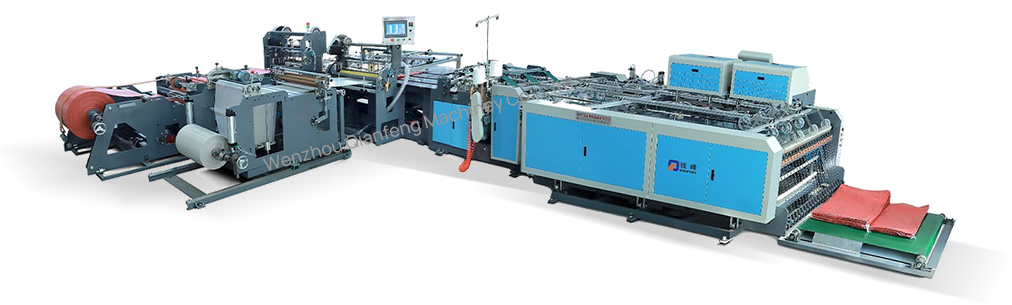
Outer Bag Cutting Length (mm):600-1200
Outer Cloth Width (mm):450-650
Inner Bag Wider than Outer Bag (mm) +20
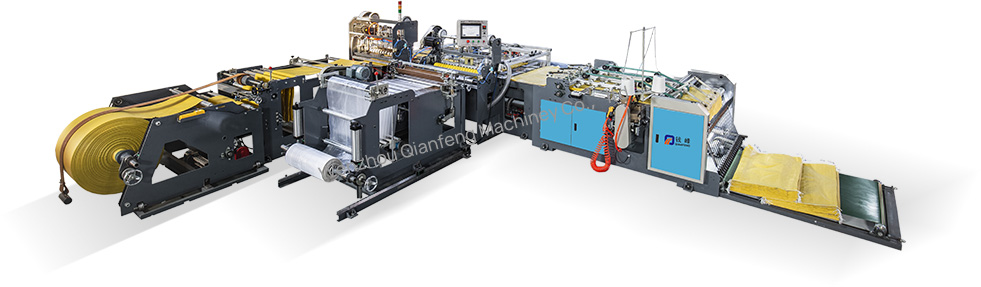
Outer Bag Cutting Length (mm):600-1200
Outer Cloth Width (mm):400-680
GET A QUOTE



 中文
中文 English
 Pусский
 Français
 Español