A fertilizer producer in Nigeria once lost an entire pallet of 50kg bags—not because the fabric tore, but because the bottom stitching failed during stacking. The plant had specified single stitching to save money. The bags held during filling, but under the pressure of warehouse stacking, the seams gave way.
The repair bill? The cost of replacing 800 burst bags plus the customer’s compensation. The actual loss was five times the savings from choosing single stitching over double.
If you’re setting up a woven bag sewing operation, the single vs. double stitch decision isn’t just a minor detail. It affects your bag strength, production speed, thread consumption, and—as the Nigerian example shows—your liability when bags fail.
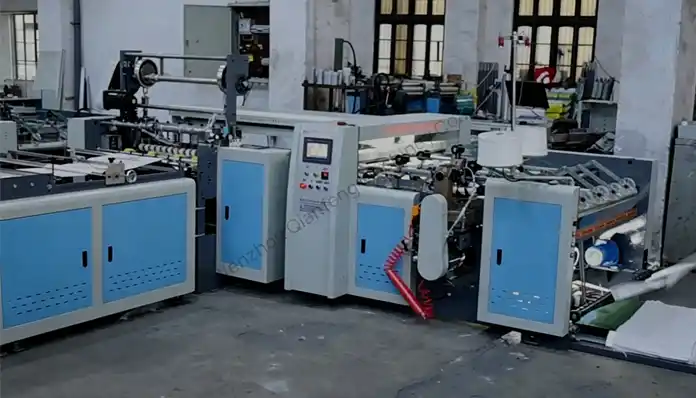
The names are self-explanatory, but the performance gap is wider than most buyers realise.
Single stitching uses one needle and one thread loop. It’s fast, uses fewer threads, and looks clean. But the seam strength comes entirely from that single line of interlocking loops. If one loop pulls through or the thread abrades, the entire seam can unzip.
Double stitching uses two needles, two threads, and creates two parallel, interlocking stitch lines. The two lines are independent—if one fails, the other still holds the bag closed. Double stitching also creates a wider sealed area, which distributes stress better when the bag is filled with heavy, shifting contents like sand, grain, or fertilizer.
| Feature | Single Stitch | Double Stitch |
|---|---|---|
| Seam strength | Moderate (approx. 60-70% of fabric strength) | High (80-90% of fabric strength) |
| Thread consumption | Baseline (1x) | 1.8-2x (two threads, two needles) |
| Production speed | Faster (up to 25-30 bags/minute) | Slower (15-20 bags/minute) |
| Typical applications | Light loads, retail bags, promotional bags | Heavy industrial loads, food-grade, export shipping |
| Risk of seam unzipping | Moderate – a single thread break is critical | Low – one line can fail, other holds |
| Equipment cost | Lower (single-head sewing unit) | Higher (dual-needle head, stronger drive) |
*Data based on industry sewing standards and bag manufacturer audits (2022-2025).*
This is the single most important question. A bag’s stitching is the last line of defense before your customer’s product spills onto a warehouse floor.
Single stitching is acceptable when:
Net weight under 15 kg – Light loads put less stress on the seam
Contents are non-abrasive – Soft goods like textiles, foam, or lightweight plastic parts
Bags are for retail display – Single stitch looks cleaner and more finished
Bags are disposable (single use) – The bag only needs to survive one filling and one opening
Double stitching is the safer choice when:
Net weight over 25 kg – Heavy loads require the extra safety margin
Contents shift during handling – Grain, sand, pebbles, or granular products move inside the bag, creating dynamic stress on the seam
Bags are stacked high in storage – Bottom bags in a pallet stack bear compression that can burst a single stitch
Products have sharp edges – Crushed stone, recycled glass, or metal parts can abrade a single thread line
Export shipping – Vibration and humidity during container transit test every seam
Real feedback from a plant manager in Indonesia: “We switched to double stitching for our 40kg rice bags after a single season of complaints. The extra thread cost us about $0.008 per bag. The customer retention? Priceless.”
Single stitching is faster. That’s a fact. A skilled operator on a well-tuned woven bag sewing station can produce 25-30 bags per minute with single stitching. Double stitching typically runs at 15-20 bags per minute because the dual-needle head requires more precise alignment and the machine cycles slower to maintain stitch consistency.
But speed isn’t the full story. Consider this calculation from a bag plant in Vietnam:
Single stitch line: 28 bags/min, thread cost $0.004/bag, seam failure rate 1.2% (based on their quality audits)
Double stitch line: 18 bags/min, thread cost $0.012/bag, seam failure rate 0.1%
The single stitch line produced more bags per hour but generated 12 times more seam failures. Each failed bag meant a customer complaint, a return, or—worst case—a spill that damaged other products. When they calculated total cost (production + quality + customer service time), double stitching was actually cheaper for their heavy-load orders.
Your decision rule: If your bag weight is under 15kg and your customer has low quality expectations (e.g., disposable construction debris bags), single stitch speed is valuable. If your bag goes to a brand-conscious buyer or holds valuable contents, the extra seam security of double stitching justifies the slower speed.
Here’s a failure mode that catches many manufacturers off guard. Single stitching relies on one continuous thread loop. If that thread snags, abrades, or breaks at any point, the entire seam can unzip like a zipper. One small nick during filling line handling, and the bag opens.
Double stitching has two independent thread loops. If one thread breaks, the second line still holds the seam closed. The bag remains intact—though it may need to be downgraded or repacked. This redundancy is why double stitching is the default for food-grade bags, chemical packaging, and any application where a spill would create a safety hazard.
A telling example from a chemical bag producer in Thailand: “We audited our seam failures over six months. Single stitch failures were catastrophic—bags opened completely. Double stitch failures were partial—we caught them during quality checks before they left our floor. The difference in customer impact was night and day.”
Choosing between single and double stitching isn’t only about the machine configuration. The thread itself matters enormously. Polypropylene (PP) woven bags require specific thread characteristics:
UV resistance – If bags are stored outdoors, standard polyester thread degrades in sunlight
Abrasion resistance – Heavy or sharp contents wear through cheap thread quickly
Elasticity matching – The thread should stretch at a similar rate to the PP fabric; mismatched stretch creates puckering or thread breakage
Practical advice from a maintenance supervisor in Kenya: “Buyers spend hours comparing stitch types, but buy the cheapest thread they can find. We switched to a premium bonded polyester thread for our double stitching—it cost 40% more but lasted three times longer in field use. The total cost per bag dropped.”
If you choose double stitching, invest in quality thread. The additional security of a second line is wasted if the thread itself is weak.
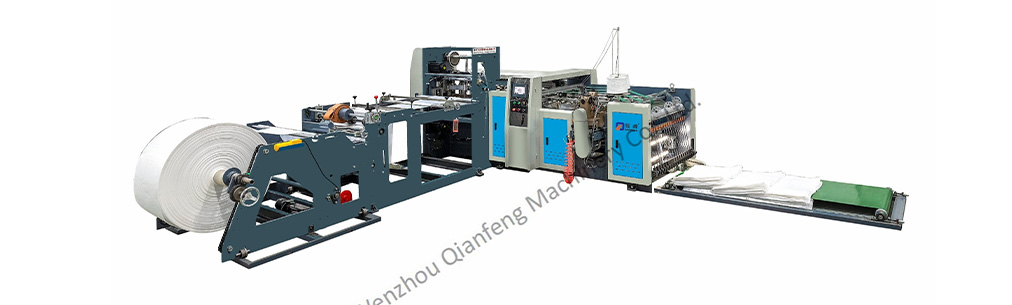
Some bag production lines are fixed—they’re set up for either single or double stitching at the factory. Others allow you to switch between the two by changing the sewing head or adjusting the control settings.
If your order mix varies (e.g., light retail bags some weeks, heavy industrial bags others), a convertible bottoming station is worth the investment. The changeover takes 30-60 minutes but gives you flexibility without buying two separate machines.
If you run mostly one bag type, buy a dedicated configuration. Convertible heads cost more upfront and have slightly more complexity—not worth it if you never use the second mode.
A hybrid approach used by several plants: two dedicated lines (one single, one double) plus a third convertible unit for odd orders. This gives both speed on standard work and flexibility for specials.
For bag manufacturers experiencing growing order variety, review the convertible bottoming options before committing to a fixed configuration.
Use this simple five-question framework with your team:
| Question | Single Stitch | Double Stitch |
|---|---|---|
| Bag weight? | Under 15 kg | Over 25 kg |
| Contents? | Non-abrasive, stable | Shifting, granular, heavy |
| Customer brand? | Low sensitivity, disposable | High sensitivity, branded |
| Storage stacking? | Single layer, no compression | Palletised, multiple layers |
| Export? | Local use only | Yes – any export |
If you answered three or more in the right column, you need double stitching. Two or fewer? A single stitch may be sufficient. explore flexible platform configurations that allow module swapping rather than buying two separate lines.
Let’s put numbers on it. Based on 2024 pricing for a mid-volume bag plant:
Single stitch line: Lower equipment cost, 40% more bags per shift, thread cost ~$0.004/bag
Double stitch line: Higher equipment cost, seam failure rate 90% lower, thread cost ~$0.012/bag
For a plant producing 1 million bags per month, the monthly thread cost difference is 8,000(8,000(4,000 for single vs. $12,000 for double). That sounds significant. But one major customer loss due to bag failures costs far more.
The smart buyer’s approach: Run double stitching for all bags over 20kg and for any customer who has ever filed a seam complaint. Run single stitching only for lightweight, non-critical, or promotional bags where you can afford the occasional failure.
The Nigerian fertiliser plant I mentioned at the beginning? They switched to double stitching on all bags over 30kg. Their seam failure rate dropped by 85% in the first three months. The plant manager’s comment: “We should have done this years ago. The thread cost is nothing compared to one ruined customer relationship.”
Single stitching has its place—lightweight retail bags, promotional giveaways, disposable liners. But for any bag that carries value, travels distances, or stacks high, double stitching is not an upgrade. It’s a baseline.
If you’re designing woven bag sewing layouts with mixed orders including heavy and critical items, prioritise machines that support both single and double stitching. It adapts well to ordinary goods and sturdy, demanding products alike. Refitting single-stitch equipment afterwards incurs high costs, so getting the suitable dual-stitch setup from the start is a cost-effective safeguard. View the Multifunctional Conversion Line for Woven Bag Production.
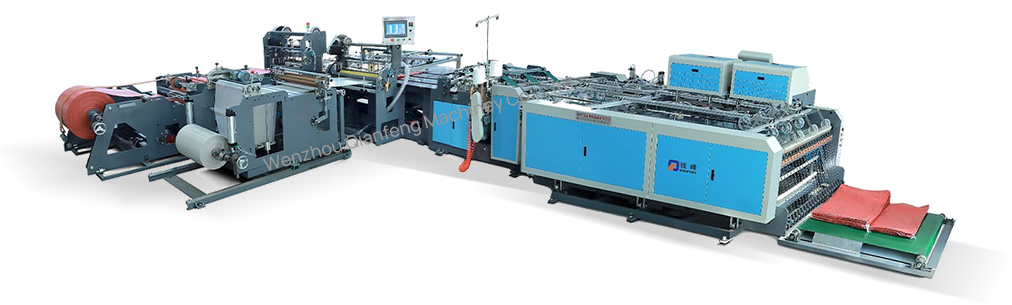
Outer Bag Cutting Length (mm):600-1200
Outer Cloth Width (mm):450-650
Inner Bag Wider than Outer Bag (mm) +20
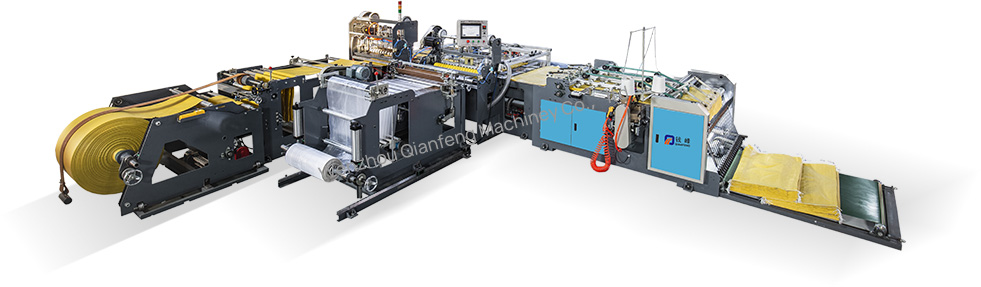
Outer Bag Cutting Length (mm):600-1200
Outer Cloth Width (mm):400-680
GET A QUOTE



 中文
中文 English
 Pусский
 Français
 Español